


Introduction to Loose Leaf Bookkeeping
Loose leaf bookkeeping refers to a traditional method of record-keeping that utilizes individual sheets or loose pages to document financial transactions rather than consolidating information into a bound book. This approach allows for greater flexibility and ease of organization, as users can add, remove, or rearrange pages as needed. Loose leaf bookkeeping stands apart from other accounting methods, such as computer accounting systems (CAS) and manual bookkeeping, each having their own distinct features and applications in financial management.
Unlike CAS, which rely on digital tools and software to automate data entry and calculations, loose leaf bookkeeping requires a more hands-on approach. While technology can enhance efficiency and accuracy in modern bookkeeping practices, loose leaf methods appeal to those who prefer a tangible and editable format for tracking their finances. This method is particularly useful for small businesses or individuals who wish to maintain a detailed and accessible record without investing in sophisticated software solutions.
Moreover, loose leaf bookkeeping allows for a higher degree of customization. Users can design their own templates, choose how to organize financial data, and maintain a level of control that may not be possible with standardized software programs. Despite the advantages of flexibility and ease of use, loose leaf bookkeeping does require meticulous management to avoid disorganization. This makes it particularly important for individuals to have a clear understanding of the tax regulations and compliance requirements associated with this method, especially regarding submission to the Bureau of Internal Revenue (BIR).
What is Loose Leaf Bookkeeping?
Loose leaf bookkeeping refers to a flexible and organized method of maintaining financial records in the form of separate sheets or pages, rather than in bound books. This system is particularly advantageous for businesses that require a certain level of adaptability in managing their accounting documentation. Each page serves as an individual record that can be easily added, removed, or rearranged, which enhances the efficiency of data organization and retrieval.
One of the key characteristics of loose leaf bookkeeping is the ability to customize the format and structure of records to fit a business’s unique needs. Unlike traditional bound record-keeping methods, where entries are fixed in place, loose leaf systems allow for dynamic adjustments. This means that if a business undergoes structural changes, such as expansion or rebranding, the bookkeeping system can be modified accordingly without the need to start from scratch.
Historically, this method has roots in the early practices of bookkeeping, where accountants would use individual sheets of paper to document transactions. The transition towards loose leaf systems gained momentum with advancements in technology, as businesses sought more efficient and adaptable ways to manage financial data. Loose leaf bookkeeping has grown especially prevalent due to advances in digital storage and accounting software, allowing for both physical and electronic documentation.
Today, the application of loose leaf bookkeeping continues to be relevant for various organizations, particularly those that prioritize compliance and accuracy in financial reporting. By allowing for ease of modification and access, this method has positioned itself as a strong contender in the modern bookkeeping landscape.
Comparing Loose Leaf with CAS and Manual Bookkeeping
When assessing the various methods of bookkeeping, it is essential to consider the distinct characteristics that define loose leaf bookkeeping, Computerized Accounting System (CAS), and manual bookkeeping. Each of these methodologies presents unique advantages and disadvantages, influencing their suitability for different types of businesses.
Loose leaf bookkeeping is recognized for its flexibility and ease of accounting management. Businesses utilizing this method maintain their records on separate sheets, which can be modified without the hassle of entering data into a single record book. This system is particularly advantageous for those who prefer physical documentation, as it allows for easy reorganization and access to financial information. However, the risk of losing individual pages or misplacing them can lead to challenges in accuracy and compliance.
On the other hand, CAS employs software to streamline the bookkeeping process, significantly reducing human error and increasing efficiency. This digital approach provides automated calculations and instant access to reports and audits. Furthermore, CAS is often integrated with other financial tools making it easier for businesses to manage their accounting responsibilities in real-time. Yet, it may come with higher costs due to software licensing and maintenance, which can be a drawback for smaller businesses.
Manual bookkeeping, the traditional method, requires individuals to record all transactions manually. While it is often more cost-effective and requires minimal technological resources, it can be time-consuming and susceptible to human error. In many cases, this method may not meet rigorous compliance standards set by the Bureau of Internal Revenue (BIR) due to the potential for inaccuracies and unorganized data. Thus, while this method may work for very small businesses, the scalability and efficiency do pose limitations.
Each of these bookkeeping methods—loose leaf, CAS, and manual—offers unique solutions, depending on the specific needs of the business. Understanding their differences and implications on accounting practices is crucial in determining the most suitable approach for efficient financial management.
Advantages of Loose Leaf Bookkeeping
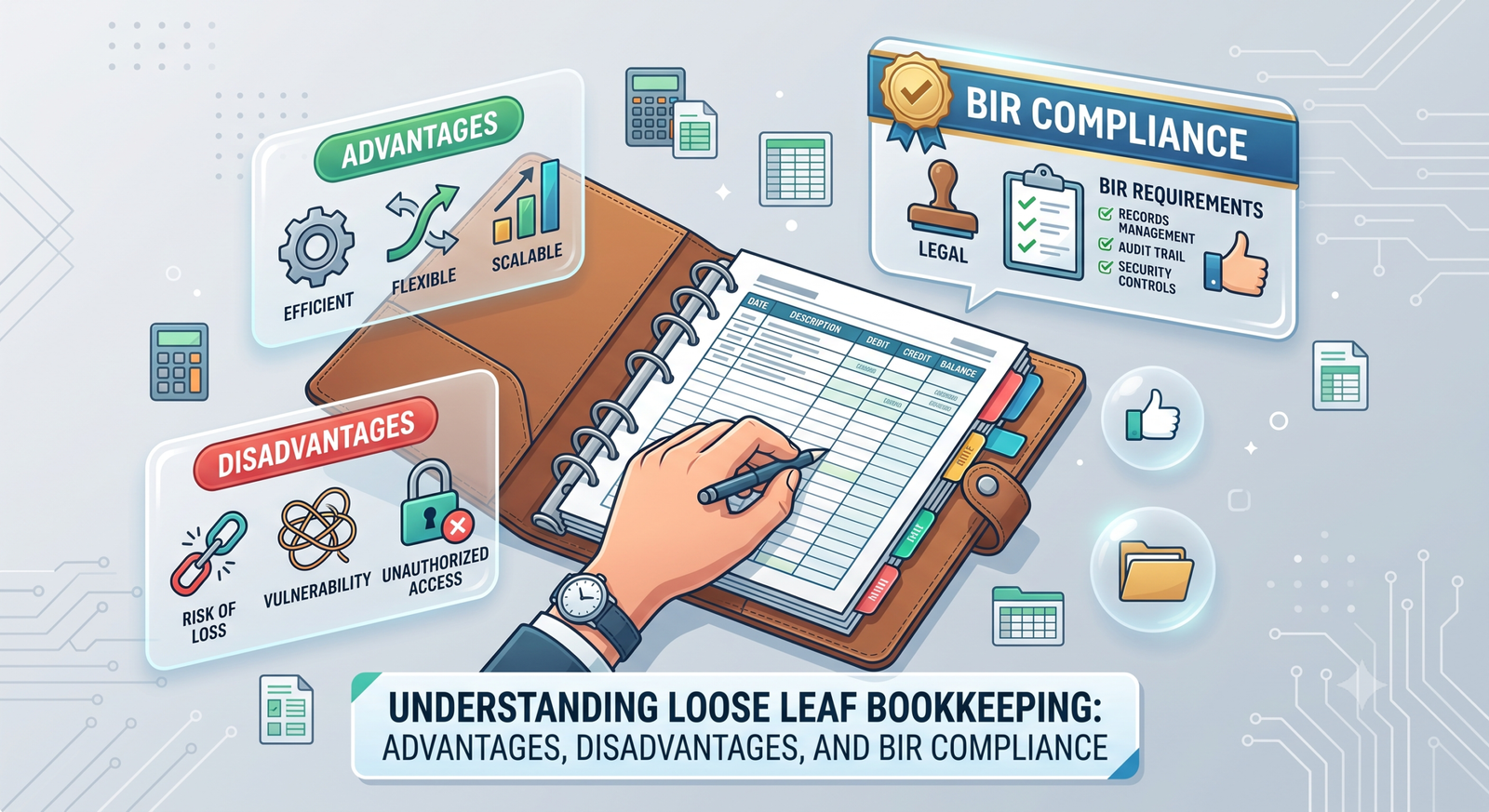
Loose leaf bookkeeping offers several significant advantages for individuals and businesses alike, making it a popular choice in financial management practices. One of the primary benefits is its remarkable flexibility. Unlike traditional bound bookkeeping systems, loose leaf systems allow users to add or remove pages easily. This adaptability proves invaluable, especially when needing to customize reports or adjust specific aspects of the financial records.
In addition to flexibility, loose leaf bookkeeping also enhances the ease of organization. Individuals can arrange their financial documents to suit their unique workflow, whether through chronological order, by account type, or by project. This method of organization facilitates not only easier data entry but also simplified access to information when needed. As a result, loose leaf systems can lead to improved accuracy during bookkeeping, as financial professionals can quickly locate relevant paperwork without sifting through a bulky ledger.
Quick access to records is another critical advantage of loose leaf bookkeeping. Whether it’s needed for tax preparations, financial reviews, or audits, having the ability to retrieve documents swiftly can make a considerable difference. This accessibility is particularly beneficial for businesses facing compliance deadlines, as it ensures that necessary information is readily available to meet regulatory requirements.
Lastly, the use of loose leaf systems may present potential cost benefits. By opting for a more flexible method of bookkeeping, businesses can often save on material costs associated with traditional ledger books, as well as reduce time expenditures on organization and retrieval tasks. Overall, the combination of flexibility, organization, quick access, and potential cost-efficiency makes loose leaf bookkeeping an attractive option for effective financial management.
Cons of Loose Leaf Bookkeeping
While loose leaf bookkeeping can offer several benefits for businesses, it does have notable disadvantages that must be considered. One of the primary drawbacks is the risk of disorganization. Because invoices, receipts, and other financial documents are kept in separate sheets rather than a centralized system, it can become challenging to maintain order. This disarray often leads to difficulties when preparing financial statements or audits, as essential documents may be misplaced or difficult to locate in a sea of loose pages.
Another significant concern is the potential for loss of documents. With loose leaf bookkeeping, the physical nature of the paperwork makes it susceptible to various risks, such as accidental misplacement, damage from spills, or natural disasters. If critical financial documents are lost or destroyed, this can have serious repercussions for a business’s accounting practices, tax compliance, and overall financial health.
Moreover, transitioning from loose leaf bookkeeping to digital formats can present its own set of complexities. As the world increasingly moves towards electronic bookkeeping solutions, organizations that have relied on loose leaf systems may find it challenging to digitize their records. The process often requires significant time investment and meticulous care to ensure all data is accurately transferred. Furthermore, retraining staff to adapt to electronic systems may also create a temporary disruption in normal business operations.
In essence, while loose leaf bookkeeping might initially appear as an efficient method, the disorganization, potential for document loss, and complications in transitioning to a more modern digital system are critical factors that warrant careful consideration before adopting this approach for managing bookkeeping tasks.
BIR Regulations Related to Loose Leaf Bookkeeping
In the Philippines, loose leaf bookkeeping is governed by regulations established by the Bureau of Internal Revenue (BIR). These regulations ensure that businesses maintain accurate and compliant financial records. Under the BIR jurisdiction, taxpayers using loose leaf accounting books must adhere to certain requirements to avoid penalties or issues with tax compliance.
Firstly, businesses opting for loose leaf bookkeeping must secure approval from the BIR before they can utilize this method. The application for the approval involves submitting an application form along with a sample of the intended loose leaf accounting format. This process is crucial as it guarantees that the format aligns with BIR standards.
Once approval is granted, companies are mandated to keep their loose leaf records systematically organized. This means that all accounting entries must be recorded in a consistent manner and must be readily accessible for audit purposes. The records must also be kept in a secure location to protect against unauthorized access or loss.
Additionally, businesses must document each transaction accurately, ensuring that they reflect the true financial activities of the entity. Maintaining supporting documents, such as receipts and invoices, is equally essential. These documents serve as evidence of transactions and must be kept well-organized alongside the loose leaf bookkeeping entries.
To maintain compliance, businesses should also be aware of the time frames regarding record-keeping. The BIR requires that these records should be kept for a minimum of three years after the filing of the relevant tax return. This is critical for the entity as it ensures readiness for potential audits by the BIR.
All in all, adhering to BIR regulations concerning loose leaf bookkeeping is vital for ensuring proper financial governance and avoiding any legal repercussions.
When to Choose Loose Leaf Bookkeeping
Loose leaf bookkeeping can be an effective alternative to traditional accounting methods for various business scenarios. Identifying when to utilize this approach depends on several factors, including the business size, nature, and specific operational needs. For small to medium enterprises (SMEs), particularly those with fluctuating transaction volumes, loose leaf bookkeeping provides the flexibility to record and manage financial data more dynamically.
For businesses that deal in variable inventory or seasonal sales, a loose leaf system can offer significant benefits. By allowing business owners to add or remove pages as needed, it accommodates the irregular transaction patterns that such businesses often face. This flexibility can be especially advantageous for retail outlets or service providers who experience pronounced fluctuations in business activity.
Additionally, loose leaf bookkeeping is ideal for startups and newly established businesses that may not have a full understanding of future financial requirements. Such businesses can efficiently adapt their bookkeeping practices as they grow and their needs evolve. The ability to easily reorganize financial records also makes it simpler to prepare for audits, ensuring that documentation is presented in an orderly manner.
Furthermore, businesses that prefer a more hands-on approach to their bookkeeping might find loose leaf documentation preferable. When owners want immediate access to their financial data without relying on complex software or systems, loose leaf methods can promote easier tracking of cash flow, expenses, and revenues.
In these contexts, loose leaf bookkeeping proves to be a valuable tool, enabling entrepreneurs to maintain effective oversight of their finances while ensuring it aligns with their unique operational strategies. Through its adaptability and simplicity, this method fosters an empowered approach to business accounting.
Expert Opinions and Industry Insights
In the realm of bookkeeping, particularly when discussing loose leaf systems, expert opinions offer invaluable perspectives on the effectiveness and application of this method in various business contexts. Many certified accountants and bookkeeping professionals highlight the flexibility of loose leaf bookkeeping, allowing businesses to adapt their financial records more efficiently. One notable advantage cited by experts is the ease of maintaining organized records without the constraints of traditional ledger systems. This adaptability can be instrumental for businesses experiencing rapid growth or fluctuations in transactions, as loose leaf allows for quick adjustments and modifications to entries.
However, industry professionals also emphasize the importance of implementing strict organizational standards when employing loose leaf methods. The risk of disorganization can pose a significant drawback, potentially undermining the intended benefits. According to a recent survey of accountants, a well-structured loose leaf system can be as robust as computerized bookkeeping when combined with diligent practices. This insight reiterates the necessity for ongoing training and awareness among staff who handle bookkeeping tasks to ensure compliance and operational efficiency.
Moreover, several experts advocate for integrating digital tools with loose leaf methods. The combination not only enhances data accessibility but also assists in maintaining the accuracy of financial records. With the increasing trend toward hybrid systems, professionals recommend businesses to consider how loose leaf bookkeeping can coexist with contemporary digital solutions, thus streamlining both paper and electronic record-keeping processes. This integrative approach can provide a comprehensive overview of financial health, leading to better decision-making and enhanced overall efficiency.
Conclusion: Why Consider 25east for Bookkeeping Needs
After examining the various facets of loose leaf bookkeeping, it becomes evident that this approach holds both benefits and challenges. Businesses looking to implement systematic and compliant bookkeeping practices may find loose leaf methods to be advantageous due to their flexibility and ability to meet specific organizational needs. However, the potential drawbacks, such as the lack of automation and increased manual workload, should not be overlooked. Therefore, careful consideration is crucial when deciding on the right bookkeeping method.
At this juncture, it is important to highlight the expertise of 25east in the realm of bookkeeping services. With comprehensive knowledge of both traditional methods and modern standards, 25east stands out as a reliable partner for businesses navigating the complexities of financial management. Their tailored bookkeeping solutions encompass everything from meticulous record-keeping to offering sophisticated support that caters specifically to the unique requirements of different businesses.
Given that compliance with regulatory requirements set by the BIR is paramount, 25east provides assurance that all bookkeeping practices adhere to necessary guidelines. The company’s team of skilled professionals is equipped to streamline businesses’ financial operations, ensuring accuracy and efficiency. By utilizing advanced techniques alongside loose leaf bookkeeping strategies, they proficiently manage transactions while minimizing errors.
In conclusion, for those seeking dependable bookkeeping services that align with both practical needs and BIR compliance, reaching out to 25east can be a transformative decision. Their commitment to excellence and customized service will support businesses in achieving their financial objectives without the worries of navigating bookkeeping complexities alone. Take the step towards financial clarity and contact 25east for personalized bookkeeping solutions.