



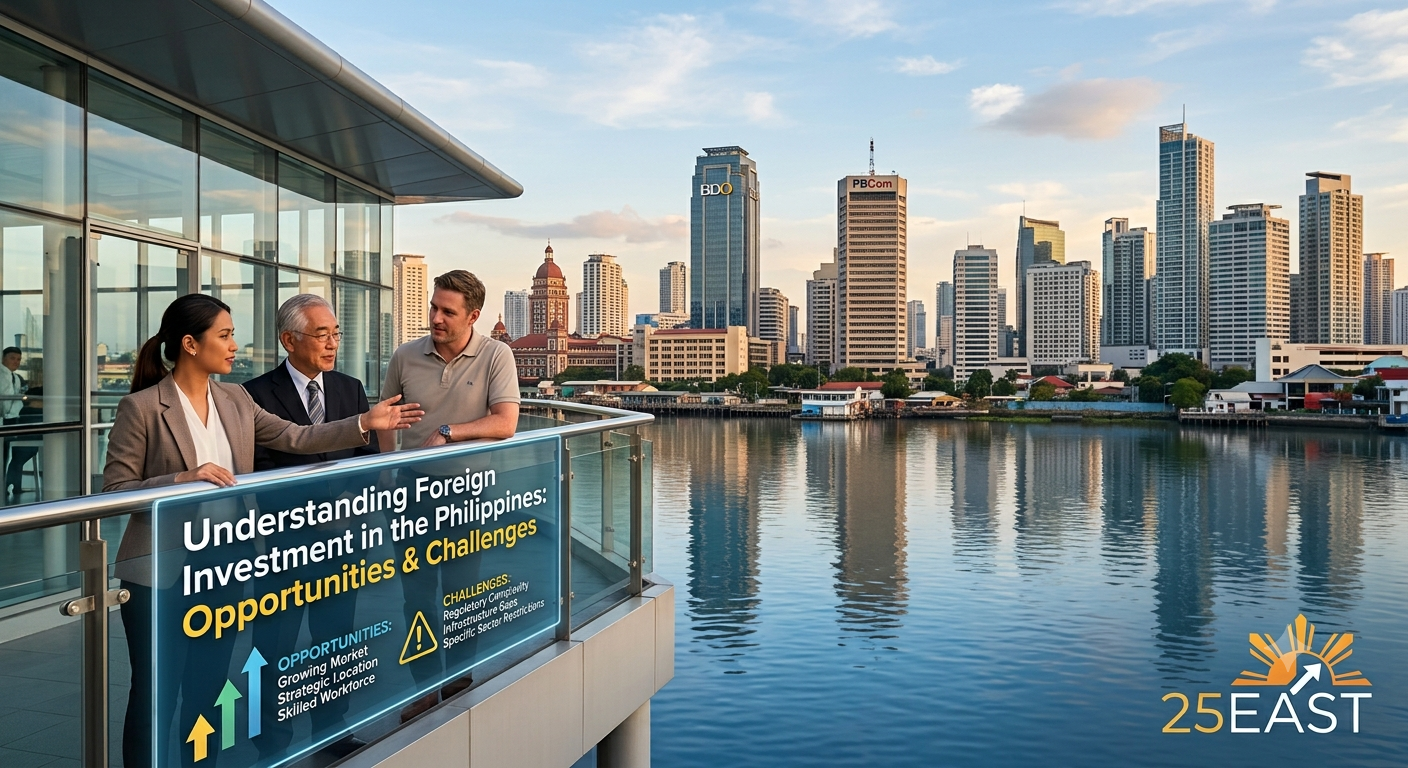
Introduction to the Foreign Investment Act
The Foreign Investment Act (FIA) of the Philippines is a crucial piece of legislation designed to promote, regulate, and facilitate foreign investments in the country. Enacted in 1991 and subsequently amended, the FIA aims to attract foreign capital to bolster the country’s economic development while ensuring compliance with specific regulations and guidelines. The primary objective of the Act is to create a conducive environment for foreign investors by providing a clearer legal framework in which they can operate.
The legal framework established by the Foreign Investment Act encompasses various aspects of foreign investment, including the establishment of foreign-owned businesses, acquisition of land, and the participation of foreign nationals in various industries. The FIA sets forth guidelines on foreign equity restrictions, which delineate the extent to which foreigners can own or control businesses in specific sectors, particularly in activities deemed vital to national interest.
Moreover, the FIA is complemented by several implementing rules and regulations that outline detailed processes and procedures for foreign entities looking to invest in the Philippines. These regulations provide clarity on the registration process, taxation policies, and incentives available for foreign investors, creating a transparent environment where potential investors can make informed decisions.
Additionally, the act aims to promote the principles of fair competition and protection of local industries while ensuring that foreign investments contribute meaningfully to economic growth. It also plays a significant role in fostering an accountability framework among consulting firms and accounting firms engaged in advisory roles for foreign investors. By understanding the multifaceted dimensions of the Foreign Investment Act, potential investors can navigate the complex landscape of foreign investment in the Philippines effectively.
Key Investment Opportunities in the Philippines
The Philippines presents a wide array of investment opportunities across various sectors, making it an attractive destination for foreign investors. Several industries are particularly promising, with potential for significant returns on investment. One of the most lucrative sectors is real estate. With a rapidly urbanizing population and increasing demand for both residential and commercial spaces, investments in real estate development can yield substantial profits. Major cities, such as Metro Manila, are experiencing significant infrastructure growth, further enhancing the value of property investments.
Another growing sector is technology, where the country has seen a surge in startups and tech-based solutions. Foreign investment in Philippine technology firms can tap into a vibrant pool of skilled professionals, particularly in areas like software development and business process outsourcing. Demand for innovative solutions continues to rise, providing an excellent return on investment for those looking to enter this market.
The tourism sector is another area of interest. The Philippines is known for its breathtaking landscapes and rich cultural heritage, attracting millions of international tourists each year. Investment in tourism-related ventures, such as hotels, resorts, and travel agencies, can be very rewarding as the country continues to promote itself as a prime tourist destination.
Agricultural businesses also hold significant potential. The Philippines has abundant natural resources and a favorable climate for diverse agricultural products. Investing in agriculture not only contributes to food security but also offers the chance to profit from both local consumption and export opportunities. Lastly, the move towards sustainability has opened avenues in renewable energy. The government is actively promoting eco-friendly practices, making sectors like solar and wind energy ripe for foreign investment.
Exploring these sectors, with the assistance of a reputable consulting firm or accounting firm, can greatly facilitate navigating the investment landscape in the Philippines, thus maximizing growth potential and returns.
Advantages of Investing in the Philippines
Investing in the Philippines presents a plethora of opportunities for foreign investors, primarily due to its growing economy, skilled workforce, and supportive government policies. The country has witnessed consistent economic growth over the past decade, bolstered by strong domestic consumption and remittances from overseas Filipino workers. This robust economic environment creates a favorable landscape for businesses looking to establish or expand their operations.
One of the standout features of the Philippines is its young and dynamic workforce. With a median age of just 24 years, the country has a large demographic of young individuals eager to enter the job market. This not only ensures a vibrant labor pool but also contributes to fostering innovation and creativity among employees. Additionally, English is widely spoken, making it easier for foreign firms to communicate with their teams and clients.
Competitive labor costs further enhance the attractiveness of the Philippines for foreign investment. Compared to other Southeast Asian nations, labor expenses in the Philippines remain significantly lower, allowing businesses to maintain reasonable operational costs while benefiting from a disciplined and educated workforce. As companies prioritize cost efficiency, the Philippines becomes a compelling choice.
Moreover, the Philippine government actively encourages foreign investment through various incentives, such as tax holidays and reduced corporate income tax rates. The Board of Investments (BOI) and the Philippine Economic Zone Authority (PEZA) provide guidance and support to foreign businesses, enabling them to navigate the regulatory environment effectively. These incentives attract multinational corporations, boosting the country’s stature as an ideal destination for foreign investment.
In conclusion, the combination of a growing economy, a young and adaptable workforce, competitive labor costs, favorable demographics, and supportive government policies makes the Philippines a prime location for foreign investments. Coupled with the presence of reputable accounting and consulting firms, foreign investors can confidently explore the myriad opportunities that lie within this emerging market.
Challenges and Disadvantages of Foreign Investment in the Philippines
Foreign investment in the Philippines presents numerous opportunities, but it is not without its challenges and disadvantages. One primary concern for foreign investors is the bureaucratic hurdles that can significantly delay project approval and implementation. Navigating the complex web of government regulations, including securing necessary permits and licenses, often proves to be a time-consuming process that requires meticulous attention to detail and an understanding of local governance.
Additionally, infrastructure issues present another formidable challenge. While some areas in the Philippines have seen significant improvements, many still struggle with inadequate transportation, unreliable utilities, and limited telecommunications systems. This deficiency not only affects the operational efficiency of foreign firms but can also lead to increased costs and logistical complications. An accounting firm or consulting firm may be necessary to help assess these risks accurately and develop strategies to mitigate them.
Political instability is another factor that potential investors must consider. In recent years, the Philippines has experienced instances of political unrest that can create an unpredictable environment for foreign investment. Changes in government policy, arising from shifting political dynamics, can adversely impact the business landscape, creating uncertainty for foreign investors who rely on a stable investment climate.
Lastly, the challenge of navigating local laws and regulations cannot be overstated. The Philippines has a unique legal framework that may differ significantly from the investor’s home country. Understanding these legal nuances is crucial for compliance and to avoid potential disputes or legal pitfalls. This complexity often necessitates the involvement of specialized advisory services, such as law firms or local consulting firms, that can provide insight and guidance on the legal landscape.
Understanding Nominee Directors and Their Role
In the context of foreign investment in the Philippines, the role of a nominee director becomes crucial for foreign-owned corporations seeking to navigate the complexities of local regulations. A nominee director is an individual appointed to represent the interests of shareholders, particularly in cases where the actual owners are not residents of the Philippines. Their primary function is to ensure that the corporation adheres to the requirements set by the Securities and Exchange Commission (SEC) and the Financial Executives Institute (FINL), facilitating smooth operations for foreign businesses entering the Philippine market.
The use of nominee directors is particularly beneficial in complying with the Foreign Investments Act, which restricts foreign ownership in certain sectors. By designating a nominee director who is a Filipino citizen, foreign investors can meet legal stipulations while also benefiting from the director’s local expertise and understanding of the business environment. This crucial liaison between the foreign investment entity and the regulatory framework can significantly expedite the business establishment process, minimizing the risks associated with non-compliance.
Furthermore, nominee directors can take on various responsibilities within a foreign-owned corporation, such as making decisions regarding corporate governance and compliance with local laws. Their presence ensures that the identity of the foreign stakeholders remains confidential while also providing assurance that local regulatory bodies are satisfied. This enhances both the credibility of the foreign investment and its acceptance in the Philippine market.
In essence, the involvement of a nominee director within a foreign-owned corporation not only simplifies dealings with regulatory authorities but also embodies a strategic approach to entering the competitive landscape of the Philippine economy. Such arrangements underscore the importance of aligning with local practices while seeking to leverage foreign investment opportunities across diverse sectors.
The Value of Partnering with Local Firms like 25East
Foreign investors looking to establish a presence in the Philippines can reap significant benefits by collaborating with local firms, such as 25East, an esteemed consulting and accounting firm. Partnering with such an entity can provide critical insights into the local market, regulatory dynamics, and operational practices, which ultimately streamline the setup process.
One of the primary advantages of engaging a local firm is gaining access to their extensive knowledge of the regulatory landscape. The Philippines has a unique business environment characterized by intricate laws and regulations that govern foreign investment. Local firms like 25East have the expertise to navigate these complexities, ensuring compliance with the relevant rules and thereby mitigating potential legal complications. This expertise not only saves time but also reduces the risks associated with non-compliance, which can be detrimental for foreign investors.
Moreover, local firms offer an understanding of the cultural and social nuances that can impact business operations. They provide foreign investors with valuable market intelligence and strategic advice tailored to the local context. This knowledge is indispensable for making informed decisions and adjusting business strategies to align with local expectations and consumer behavior.
Cost-effectiveness is another major factor to consider when partnering with firms like 25East. By leveraging their established networks and resources, foreign investors can achieve operational efficiency without the necessity of large-scale investments upfront. This approach alleviates the financial burden often associated with setting up in a new market and can significantly enhance the return on investment.
In summary, collaborating with experienced local firms such as 25East equips foreign investors with essential support, guiding them through the complexities of entering the Philippine market. Their expertise in regulatory compliance, cultural insights, and cost-effective solutions is invaluable for ensuring a successful and sustainable business venture in the country.
Steps for Foreign Companies to Start Operations in the Philippines
Establishing operations in the Philippines can present numerous opportunities for foreign investors, but it requires a systematic approach to navigate the regulatory landscape. Foreign companies must take the necessary steps to ensure compliance with local laws and regulations. Initially, the first step involves securing the appropriate business permits. Foreign entities intending to operate in the Philippines must obtain a Certificate of Incorporation from the Securities and Exchange Commission (SEC). This entails submitting pertinent documents including the Articles of Incorporation and By-Laws, alongside relevant identification of the company’s shareholders and directors.
Following incorporation, foreign companies need to register with the Bureau of Internal Revenue (BIR) to obtain a Tax Identification Number (TIN). This process is vital as it enables the company to file and pay taxes in compliance with local laws. Additionally, registration is required with other government agencies, which may include the Department of Trade and Industry (DTI) if engaging in retail, and local government units for business permits to operate within specific jurisdictions.
It is critical for foreign businesses to pay attention to foreign investment restrictions in certain sectors. Understanding the Foreign Investment Negative List can help identify sectors with limitations on foreign ownership, ensuring compliance with local regulations. Once the necessary permits and registrations are secured, businesses must adhere to local tax compliance obligations to maintain good standing. This typically includes Value Added Tax (VAT), corporate income tax, and other applicable local taxes.
Moreover, engaging with a reputable consulting firm or accounting firm can facilitate this process, providing expertise in navigating local regulations and ensuring adherence to the required standards. By following these systematic steps, foreign companies can establish a firm foundation for successful operations in the Philippines.
Case Studies: Successful Foreign Investments in the Philippines
The Philippines has become an attractive destination for foreign investment, evidenced by several high-profile cases demonstrating successful investment ventures. One notable example is the global fast-food chain, McDonald’s, which entered the Philippine market in the 1980s. Through strategic partnerships and localization of their menu, McDonald’s has flourished, adapting its offerings to cater to local tastes while maintaining its global identity. This case illustrates how understanding cultural nuances can lead to a successful foreign investment experience in the Philippines.
Another significant instance of successful foreign investment is the presence of various multinational accounting firms, such as Deloitte and Ernst & Young. These firms have established regional offices in the country, leveraging the growing demand for professional services in an economy that is becoming increasingly complex and competitive. Their investment demonstrates the importance of capitalizing on the burgeoning business landscape while providing quality service tailored to the local clientele, highlighting effective strategies for foreign investors.
Moreover, the technology sector has seen substantial foreign investments, particularly with tech giants like Google and Facebook establishing offices in Manila. These corporations have recognized the potential of tapping into the highly skilled and English-speaking workforce in the Philippines. In this case, it is clear that fostering a strong local talent pool represents a core strategy for foreign investment success in the region.
These examples illustrate not only the advantages of investing in the Philippine market but also highlight the need for a careful approach to execution. Foreign investment in the Philippines can be rewarding when companies remain adaptable, culturally aware, and utilize local expertise, ensuring a mutually beneficial relationship between foreign entities and the Philippine economy.
Conclusion and Future Outlook for Foreign Investments in the Philippines
The landscape of foreign investment in the Philippines is marked by a combination of promising opportunities and notable challenges. As discussed, the country’s strategic geographic location, coupled with a young and growing population, makes it an appealing destination for foreign investors. The recent reforms aimed at liberalizing the investment environment, alongside various incentives offered, provide a robust foundation for potential growth.
However, challenges remain that could impact the attractiveness of the Philippines as a foreign investment hub. These include bureaucratic hurdles, regulatory uncertainties, and infrastructure deficiencies. Addressing these challenges requires concerted efforts from both the government and private sectors, particularly in collaboration with accounting firms and consulting firms which can provide crucial insights and support to foreign investors navigating the local market.
Looking ahead, the future of foreign investments in the Philippines appears optimistic, particularly as the economic conditions evolve in response to global trends. The government’s commitment to improving the ease of doing business and strategic partnerships across sectors are likely to pave the way for enhanced foreign participation in various industries. As the country continues to invest in infrastructure and digital transformation, foreign investment opportunities are expected to grow, particularly in technology, renewable energy, and manufacturing.
In conclusion, while the Philippines has made significant strides in attracting foreign investments, continuous improvement in governance and infrastructure will be crucial. By leveraging the expertise of accounting and consulting firms, foreign investors can better navigate the complexities of the market, thereby capitalizing on the myriad of opportunities that the Philippine economy has to offer.