


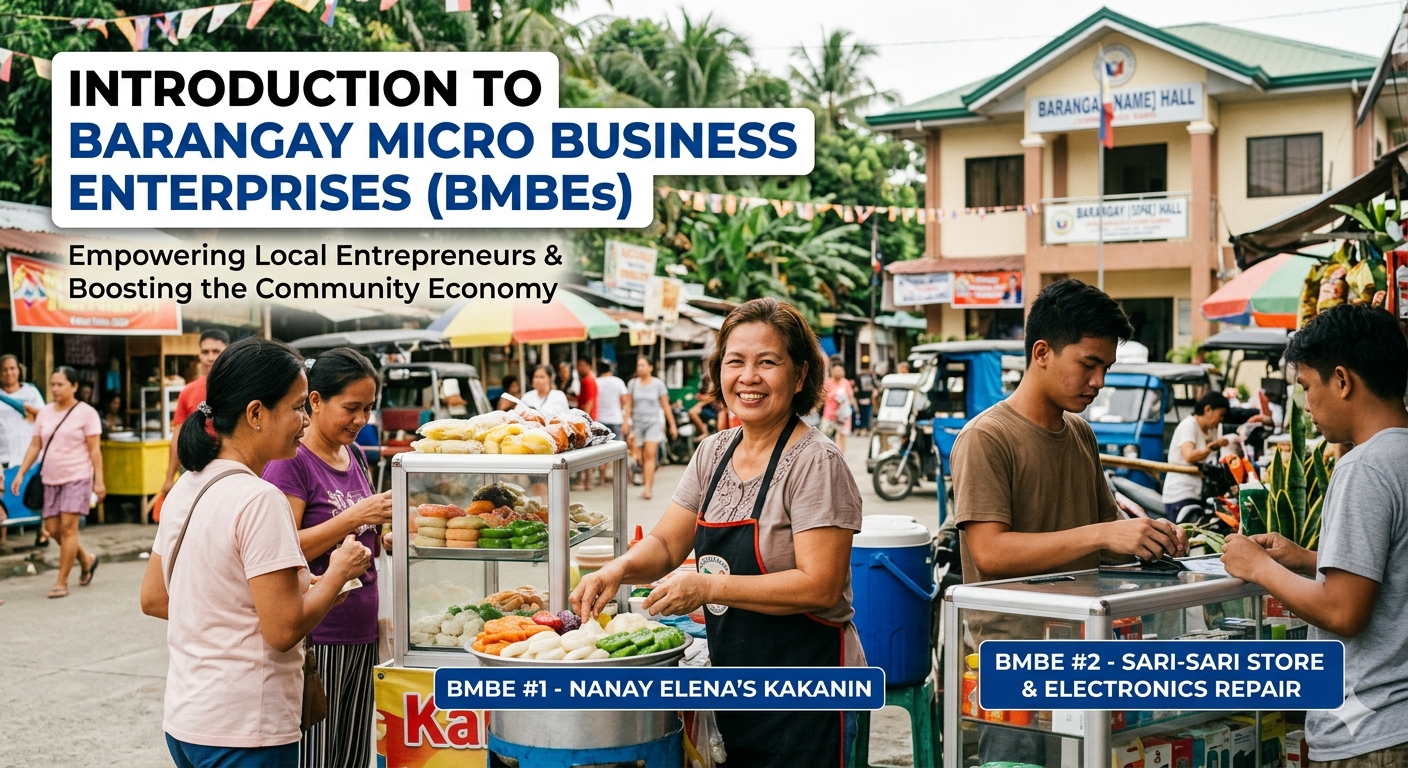

Introduction to Barangay Micro Business Enterprises (BMBEs)
Barangay Micro Business Enterprises, commonly referred to as BMBEs, play a pivotal role in fostering local economic development in the Philippines. Defined under the Republic Act No. 9178, the framework for establishing BMBEs has been designed to empower entrepreneurs, particularly those operating within barangays, the smallest administrative divisions in the country. These micro enterprises contribute significantly to the economy by providing essential goods and services, creating jobs, and stimulating local consumption.
The essence of BMBEs lies in their classification as small-scale businesses that are owned and managed by individuals or groups within a community. Typically, a BMBE is categorized based on its asset base, with the maximum value set at three million Philippine pesos. This asset limit is essential for ensuring that the program supports smaller entrepreneurs who often face significant barriers to entry in the business landscape.
The government of the Philippines aims to promote BMBEs as part of its economic strategy to encourage entrepreneurship, particularly among underprivileged sectors and regions. By providing a conducive regulatory environment, the government facilitates access to financing, training, and technical assistance for aspiring entrepreneurs. This initiative not only empowers individuals to establish their business ventures but also enhances the overall resilience of local economies. Furthermore, BMBEs often tap into local resources, thereby reinforcing community ties and sustainable practices.
In understanding the significance of BMBEs, it becomes clear that they serve not just as business entities but as catalysts for social change and economic stability. The engagement of entrepreneurs in these micro enterprises builds a foundation for sustainable growth and inclusivity in the country’s economic landscape, making BMBEs an invaluable component of national development plans.
In the Philippines, the Barangay Micro Business Enterprise (BMBE) program was established to encourage and support aspiring entrepreneurs aiming to create their own small businesses. To qualify for this program, certain eligibility requirements must be met, which primarily focus on the size and capital of the business, as well as the type of enterprises recognized under this initiative.
Firstly, a business must comply with the definition of a micro enterprise, which is defined as a business that has total assets of not more than Three Million Pesos (₱3,000,000). This asset limit includes the cost of machinery, equipment, and inventory, thus ensuring that the BMBE program focuses on genuinely small-scale entrepreneurs. Furthermore, this capital threshold aims to provide opportunities for small business owners who may lack access to traditional financing options.
In terms of the types of businesses that can qualify, the BMBA program covers a diverse range of industries. Eligible enterprises can include retail stores, service-oriented businesses, and manufacturing setups, which are essential for community development and local economies. These businesses must operate within the jurisdiction of their barangay, further emphasizing the grassroots nature of the BMBE initiative.
Another vital requirement is that the entrepreneur must be a Filipino citizen, which guarantees that the benefits of the program are directed toward local business owners. It’s important for applicants to ensure that they are adequately documented, as this includes registering their business with the City or Municipal Office and obtaining the necessary permits.
The BMBE program is designed to foster entrepreneurship among micro enterprises, providing a viable path for individuals to establish their businesses. By understanding these eligibility criteria, aspiring entrepreneurs can assess their potential to benefit from this program and contribute to their local economy effectively.
Benefits of Being a BMBE
Establishing a business under the Barangay Micro Business Enterprise (BMBE) law provides numerous advantages for entrepreneurs aiming to create and expand their businesses effectively. One of the most significant benefits is the tax exemption that comes along with the BMBE registration. This exemption applies to income taxes for micro businesses, enabling entrepreneurs to allocate more resources towards growth and development instead of tax liabilities. Such financial relief can be crucial for startups or small enterprises operating on limited budgets, as it allows for reinvestment in key areas like marketing and product development.
Moreover, registering as a BMBE grants entrepreneurs access to financial resources and funding opportunities. Numerous government programs are specifically designed to support those businesses classified as BMBEs. These programs often provide low-interest loans, grants, and even training programs to foster skill development. Entrepreneurs can leverage these resources to enhance their operational capacities, invest in new technologies, or hire additional employees, all of which contribute to business growth and sustainability.
In addition to financial benefits, being a BMBE opens doors to a wealth of networking opportunities. Membership in this category can help entrepreneurs connect with fellow business owners, local government units, and various business organizations. Engagement in these networks can result in partnerships and collaborations which further enhance business visibility and market reach. Furthermore, the support from government initiatives tailored to BMBEs extends beyond just funding; it encompasses guidance on compliance with industry standards and best practices.
Overall, the BMBE designation is a vital tool for entrepreneurs aiming to position their businesses for success. The combination of tax exemptions, funding access, and extensive support from government programs creates a conducive environment for growth and innovation within the micro-enterprise sector.
Challenges Faced by BMBEs
Business Micro, Small, and Medium Enterprises (BMBEs) play a crucial role in the economy by fostering entrepreneurial spirit and creating job opportunities. However, these enterprises often encounter a host of challenges that can hinder their growth and sustainability. One prominent issue is their limited market reach. Unlike larger corporations, BMBEs typically possess restricted resources that curtail their ability to expand beyond local markets. This limitation results in diminished sales opportunities and ultimately restricts their scalability.
Moreover, BMBEs frequently face intense competition from larger businesses that can operate on a scale that BMBEs cannot match. These larger competitors benefit from economies of scale, which allows them to offer products and services at lower prices. The pressure to compete can lead BMBEs to sacrifice profit margins, and in some cases, even the quality of their products or services, which can affect their reputation and customer loyalty.
Regulatory compliance also presents a significant challenge. BMBEs must navigate various laws and regulations which can be complex and intimidating. Adhering to such requirements demands time and resources that may be scarce for many entrepreneurs. Compliance-related challenges may include tax obligations, labor laws, and environmental regulations, all of which require financial and legal knowledge that many small business owners may lack.
While BMBEs hold immense potential to invigorate local economies and foster innovation, understanding and overcoming these hurdles is essential for long-term success. Entrepreneurs involved in BMBEs must proactively seek solutions to these challenges, such as forming cooperatives for shared resources or leveraging digital marketing strategies to enhance their market presence.
How Entrepreneurs Can Leverage BMBEs
Entrepreneurs can maximize the unique advantages that BMBEs (Barangay Micro Business Enterprises) offer by implementing several strategic approaches. Firstly, effective marketing plays a crucial role in the success of a BMBE. Entrepreneurs should consider using digital marketing tools such as social media, websites, and online marketplaces to reach a broader audience. By establishing a strong online presence, BMBEs can attract not only local customers but also potential clients from remote areas. Utilizing these platforms allows for effective promotion of products and services, which can be vital for small-scale businesses eager to grow.
Another essential aspect for entrepreneurs involves accessing government assistance designed for BMBEs. Various national and local programs provide financial support, training, and resources for small businesses. Entrepreneurs should take the initiative to research these programs, as they can significantly alleviate the financial burden associated with starting and operating a business. Such government initiatives often include grants, subsidies, and low-interest loans specifically targeted toward micro-enterprises. Connecting with local government units can help entrepreneurs navigate these opportunities effectively.
Networking within the entrepreneurial community is equally important for the success of BMBEs. Entrepreneurs should aim to build relationships with fellow business owners, industry experts, and potential partners. This can be achieved through participation in business fairs, community events, or workshops focusing on micro enterprises. By engaging with others in the ecosystem, BMBE holders can share insights, receive mentorship, and explore collaboration opportunities that may lead to mutual growth.
In conclusion, leveraging the advantages of BMBEs is essential for entrepreneurs seeking to thrive. By effectively marketing their products, utilizing government assistance, and networking within the community, they can position themselves for sustainable success.
The Role of Accounting in BMBE Success
For micro, small, and medium enterprises (MSMEs), effective accounting practices are vital for fostering sustainability and growth. Business owners often overlook this essential aspect of entrepreneurship, particularly in the realm of Barangay Micro Business Enterprises (BMBEs). Proper financial management not only ensures compliance with local regulations but also provides a clearer picture of the company’s economic health.
Accounting plays a foundational role in a BMBE by tracking income and expenses, which helps in budgeting and forecasting. Consistent monitoring of financial statements aids entrepreneurs in identifying profitable activities while highlighting areas that need improvement. Additionally, having well-organized accounts can significantly enhance a BMBE’s ability to secure loans or attract potential investors, as it demonstrates reliability and professionalism.
Furthermore, understanding basic accounting principles allows BMBE owners to make informed business decisions. For instance, knowing when to invest in new equipment or assessing whether to increase staffing levels can be determined through data gleaned from financial records. This clear, evidence-based approach is invaluable in the fast-paced world of entrepreneurship, enabling businesses to adapt and thrive amid challenges.
One of the major benefits of prioritizing accurate accounting is the ability to generate detailed financial reports. Such reports can guide BMBE owners in strategizing for long-term goals, ensuring sustainable growth. Moreover, utilizing digital accounting tools can streamline this process, making it more efficient and less time-consuming. By embracing technology, entrepreneurs can focus on other critical areas of their business, thus fostering an environment conducive to success.
In summary, the importance of accounting in BMBE success cannot be overstated. It is a critical component that empowers entrepreneurs, providing them with insights that are essential for making informed decisions and driving their businesses toward long-term success.
Overview of BIR Registration for BMBEs
The Bureau of Internal Revenue (BIR) registration process is a crucial step for any micro, small, and medium enterprise (MSME) aiming to operate legally in the Philippines. One type of MSME, known as a Barangay Micro Business Enterprise (BMBE), benefits from a simplified registration process designed to empower budding entrepreneurs. Understanding this procedure can facilitate a smoother transition into the business realm for aspiring business owners.
To begin the BIR registration for a BMBE, entrepreneurs must first secure certification from their respective local government unit (LGU). This certification verifies that the business qualifies as a BMBe—typically defined as an enterprise with total assets not exceeding P3 million. Upon obtaining this, entrepreneurs must prepare several essential documents, including valid identification, proof of residence, and the necessary forms stipulated by the BIR.
Next, the complete documentation must be submitted to the nearest BIR Revenue District Office (RDO) to officially register the business. During this process, the entrepreneur will need to fill out and submit BIR Form 1901, which is the application for registration for individuals and mixed-income earners. Upon approval, the BIR will issue a Tax Identification Number (TIN), which is vital for various tax-related transactions.
Furthermore, BMBe registration allows entrepreneurs to access benefits such as exemption from income tax and simplified tax administration. These incentives aim to ease the financial burden on small business owners, allowing them to focus on growth and sustainability. Understanding these steps significantly aids in navigating the bureaucratic landscape, setting the stage for success for many entrepreneurs seeking to thrive in their respective markets.
Highlighting 25east’s Accounting Expertise
For micro, small, and medium enterprises (BMBEs), navigating the complexities of financial management is crucial to their growth and sustainability. 25east stands out as a key partner for entrepreneurs in need of specialized accounting services tailored to their unique challenges. With a deep understanding of the financial landscape faced by BMBEs, 25east provides a comprehensive suite of accounting solutions that include bookkeeping, financial advising, and tax compliance.
Bookkeeping is fundamental for any entrepreneur looking to maintain accurate financial records. 25east ensures that BMBEs have up-to-date and organized financial information, enabling them to make informed decisions. By leveraging advanced technology and best practices in bookkeeping, 25east facilitates efficient record-keeping, allowing entrepreneurs to focus on core business activities without being burdened by administrative tasks.
In addition to bookkeeping, financial advising is an essential service offered by 25east. Entrepreneurs benefit from expert guidance on budgeting, cash flow management, and strategic financial planning. This level of tailored assistance empowers BMBEs to identify growth opportunities and mitigate financial risks, positioning them for long-term success. With a strategic financial partner like 25east, entrepreneurs can align their financial goals with their business objectives, ultimately enhancing sustainability.
Tax compliance is another critical area where 25east excels. The complexities of tax regulations can overwhelm many entrepreneurs, particularly those in the BMBE sector. 25east provides comprehensive tax compliance services, ensuring that entrepreneurs meet their obligations while maximizing available deductions and credits. By managing these tax-related tasks efficiently, 25east contributes to the financial health of BMBEs, aiding in their successful navigation of the regulatory environment.
In summary, 25east’s accounting expertise is instrumental for entrepreneurs operating within the BMBE framework. Their targeted services enhance financial management, empowering entrepreneurs to achieve their business aspirations with confidence and clarity.
Conclusion and Call to Action
In the current economic landscape, the significance of Barangay Micro Business Enterprises (BMBEs) cannot be overstated. These enterprises play a crucial role in empowering local entrepreneurs and contribute to the overall economic growth and sustainability. BMBEs offer a range of benefits, including easier access to financing, tax incentives, and support from government programs aimed at fostering small businesses. This supportive environment encourages budding entrepreneurs to turn their innovative ideas into viable businesses that cater to local needs.
For aspiring entrepreneurs looking to establish their businesses, taking advantage of BMBE opportunities can provide a solid foundation for success. By participating in this program, individuals not only gain access to essential financial resources but also tap into a network of support that enhances their chances of thriving in a competitive market. The inclusion of BMBEs in the economic framework leads to job creation, increased consumer spending, and ultimately, a stronger economy.
It is crucial for potential business owners to seek professional guidance when navigating the BMBE registration process or when developing their business strategies. Institutions like 25east specialize in providing the necessary support and resources to help entrepreneurs succeed. By consulting with experts who understand the intricacies of starting and managing a BMBE, individuals can mitigate risks and optimize their business ventures.
In conclusion, the establishment of BMBEs marks a significant step towards empowering entrepreneurs and contributing to economic development. Embracing the opportunities presented by BMBEs can lead to sustainability, innovation, and community upliftment. Therefore, individuals interested in pursuing their entrepreneurial dreams should consider seeking assistance from organizations such as 25east to maximize their potential for success.