



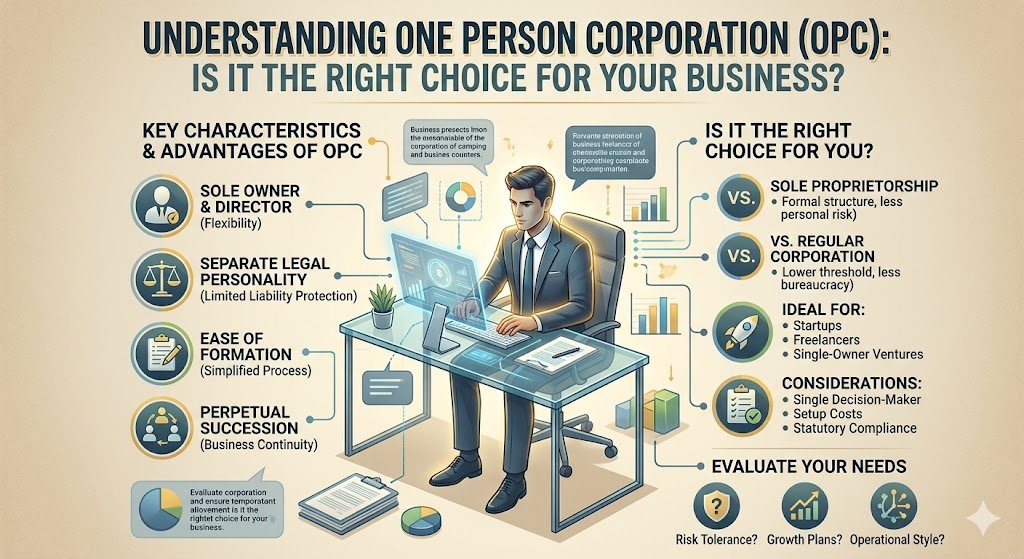
What is a One Person Corporation (OPC)?
A One Person Corporation (OPC) is a distinctive and legally recognized business entity that enables a single individual to establish and manage a corporation. This structure allows individual entrepreneurs to enjoy the benefits of corporate status, such as limited liability protection, while simplifying the administrative burden typically associated with traditional corporations. Under the guidelines established by the Securities and Exchange Commission (SEC), the OPC offers a flexible option for sole proprietors or those seeking to incorporate their business.
One of the primary features of an OPC is that it treats the owner as a distinct entity from the business, providing a layer of protection against personal liability. Unlike sole proprietorships, where personal assets can be at risk for business debts, an OPC ensures that the owner’s personal assets are safeguarded. Moreover, it streamlines the compliance and operational requirements that usually accompany multi-shareholder corporations.
In contrast to other business structures, such as partnerships, which require multiple individuals to share ownership and decision-making, an OPC allows for complete autonomy. This makes it an appealing choice for such individuals looking to leverage the advantages of a corporate structure without the complexities of shared ownership. Furthermore, the formation process for an OPC is relatively straightforward, making business registration more accessible for entrepreneurs.
Overall, the OPC presents an advantageous alternative for business owners who wish to incorporate their operations while maintaining control and minimizing personal liability risks. This unique structure bridges the gap between traditional sole proprietorships and corporations, offering a solution that caters to the needs of today’s entrepreneurs seeking growth and protection in the competitive business landscape.
Key Features of OPC
The One Person Corporation (OPC) has emerged as an attractive option for individual entrepreneurs seeking to establish a formal business structure while enjoying the advantages of limited liability. One of the most significant features of an OPC is that it allows the owner to limit their personal liability, which means that the owner’s personal assets are protected in case of business debts or legal issues. This characteristic is particularly beneficial for small business owners who want to minimize financial risks.
Another fundamental aspect of OPCs is the requirement for a minimum capital investment. According to the regulations set forth by the Securities and Exchange Commission (SEC), there is a stipulated minimum capital required to register an OPC. This requirement is designed to ensure that the business has sufficient equity to operate effectively from the outset, further enhancing its credibility in the eyes of creditors and investors.
In terms of governance, an OPC is uniquely structured, as it eliminates the need for multiple directors or shareholders. The single owner acts as the sole director and shareholder, streamlining decision-making processes. This structure not only simplifies the administration of the business but also empowers the owner to have complete control over corporate matters.
Moreover, an OPC can raise capital more effectively than sole proprietorships, as it can issue shares. This feature allows the business to attract potential investors without the complexities associated with other corporate structures. It is essential for entrepreneurs to thoroughly understand these key features of OPCs, as they can have substantial implications for business registration and overall growth strategies.
Pros of Registering as an OPC
Choosing to register your business as a One Person Corporation (OPC) offers several distinct advantages that can significantly benefit entrepreneurs. One of the most compelling reasons for this structure is the limited liability protection it provides. In an OPC, the owner’s personal assets are safeguarded against business liabilities, meaning that, in the event of debts or legal issues, personal property cannot be pursued for settlement. This protection can give business owners peace of mind as they navigate their commercial endeavors.
Moreover, the operation of an OPC is characterized by simplicity and efficiency. Unlike traditional corporations, which may involve complex governance structures and extensive paperwork, the OPC allows for straightforward management. This ease of operation is particularly advantageous for solo entrepreneurs who are looking to focus on their business pursuits without being bogged down by unnecessary formalities.
Credibility is another significant benefit of registering as an OPC. Clients and partners often perceive a corporation, even one with a single owner, as more credible and legitimate compared to unregistered enterprises or partnerships. This perceived professionalism can enhance trust and attract more business opportunities, which is essential for growth and sustainability in a competitive marketplace.
Additionally, the formation process for an OPC is notably simplified compared to traditional corporations. While business registration typically requires extensive documentation and adherence to various regulations, the OPC framework streamlines these requirements, making it less cumbersome for entrepreneurs. The Securities and Exchange Commission (SEC) has formulated clear guidelines aimed at facilitating the establishment of these entities, thus encouraging solo entrepreneurs to take advantage of this viable business structure.
Cons of Registering as an OPC
While the concept of a One Person Corporation (OPC) offers various advantages, there are notable downsides that potential business owners should consider before proceeding with the business registration process. One primary limitation is the restriction on ownership transfer. Unlike traditional corporations where shares can be easily sold or transferred, an OPC is designed specifically for a single owner, which can complicate the transition of ownership should the need arise.
Another significant drawback is the absence of a board of directors. In a standard corporation, the board plays a crucial role in governance and strategic decision-making. However, in an OPC, the responsibility is solely placed on the sole owner. This can result in a lack of diverse perspectives and may hinder the business’s ability to make informed decisions. The absence of a collective leadership structure can lead to challenges, especially in complex business environments where adaptability and innovation are vital.
Furthermore, compliance costs can be higher for an OPC compared to simpler business entities. The regulatory requirements mandated by the Securities and Exchange Commission (SEC) can impose additional burdens on the sole owner in terms of time and financial resources. Regular filings and audits are necessary to ensure compliance with legal stipulations, which can detract from the time available for core business activities. This heightened level of scrutiny often translates into more significant operational costs.
In conclusion, while the One Person Corporation might appear to be an attractive option for individual entrepreneurs seeking limited liability protection, potential owners must weigh these cons against the benefits to ascertain whether this business structure suits their long-term objectives and operational requirements.
When is OPC the Ideal Business Structure for You?
The One Person Corporation (OPC) is increasingly recognized as an advantageous business structure, particularly for sole entrepreneurs and those looking to establish a business with limited liability. One of the most compelling reasons to register as an OPC is the protection it offers to personal assets. Unlike traditional sole proprietorships, where personal finances are intermingled with business liabilities, an OPC allows the owner to maintain a distinct separation. This is particularly beneficial for solo entrepreneurs aiming to mitigate risks associated with business debts and liabilities.
Furthermore, startups that are keen to enhance their credibility often benefit significantly from OPC registration. An OPC is a formal legal entity recognized by the Securities and Exchange Commission (SEC), which can improve the business’s reputation among potential clients and investors. This formal recognition can make it easier to access funding opportunities, which is crucial during the early stages of a business. Entrepreneurs looking to establish a strong brand presence will find that operating as an OPC gives them a competitive edge by presenting a professional image.
Additionally, an OPC is ideal for those entrepreneurs who wish to have full control over their business but also want the benefits that come with limited liability. This structure is particularly favorable for individuals who may have innovative ideas and are ready to take the entrepreneurial leap but are concerned about the risks involved. With an OPC, owners have the flexibility to maintain decision-making authority while ensuring their personal assets remain protected. Knowing when to opt for an OPC can significantly influence business success and personal financial security.
How to Set Up a One Person Corporation
Establishing a One Person Corporation (OPC) is a step-by-step process that requires careful consideration and adherence to legal requirements. The first essential step is to choose a unique name for your OPC. This name must not be similar or identical to any existing corporations registered with the Securities and Exchange Commission (SEC). To facilitate name registration, you should conduct a thorough search of the SEC’s business name database.
After finalizing your OPC name, the next step involves preparing the necessary documentation. The primary documents required typically include the Articles of Incorporation, which outlines the company’s objectives, address, and the details of the sole owner. You may also need a government-issued ID of the owner, as well as a written acceptance of the position as the incorporator. It’s crucial that these documents be prepared accurately and comply with the prescribed formats outlined by the SEC.
Once the documentation is ready, the next phase is to register your business. This registration process involves submitting the Articles of Incorporation along with the supporting documents to the SEC. The filing fee must also be paid at this time. After successful submission, the SEC will issue a Certificate of Incorporation, officially recognizing your OPC as a legal entity.
Moreover, it is essential to comply with local laws, which may require additional permits and licenses specific to your business’s industry and locality. For instance, local government units might mandate that businesses acquire a Mayor’s Permit before commencing operations. By following these outlined steps, you can ensure your one person corporation is set up correctly and operating within the legal framework required for business registration.
Services Offered by 25east in OPC Formation
25east plays a pivotal role in assisting individuals who wish to establish a One Person Corporation (OPC) in a seamless manner. Understanding the complexities surrounding business registration with the Securities and Exchange Commission (SEC) can be daunting, which is why 25east offers a range of tailored services to address the specific needs of OPC formation.
Initially, 25east provides an informative and structured consultation service. This initial consultation is designed to guide prospective entrepreneurs through the basics of an OPC, explaining the advantages and responsibilities associated with this business structure. Clients are briefed on the legal requirements and operational framework necessary for compliance, which is particularly vital in ensuring the successful registration of an OPC.
Following the consultation, 25east assists with documentation. This service includes the preparation and filing of essential paperwork required for business registration. From drafting the Articles of Incorporation to submitting these documents to the SEC, every step is carefully managed by their team of experts. This minimizes the bureaucratic hurdles often associated with forming a new corporation.
Compliance support is another critical service offered by 25east. Once the OPC is established, ongoing regulatory compliance becomes paramount. 25east ensures that clients remain informed of statutory obligations and deadlines, thereby safeguarding them from any potential legal issues. Furthermore, their ongoing advisory services provide OPC owners with continuous support, enabling them to navigate the complexities of business management, taxation, and other operational challenges efficiently.
In conclusion, 25east stands out as a comprehensive service provider for individuals seeking to form a One Person Corporation, making the process of business registration straightforward and manageable while ensuring legal compliance at all stages.
Real-life Examples of Successful OPCs
One Person Corporations (OPCs) have gained popularity, showcasing the benefits of a streamlined business registration process through the Securities and Exchange Commission (SEC). Various enterprises have successfully integrated the OPC model, demonstrating how it suits individual entrepreneurs seeking to maximize their business potential while minimizing risks.
A prime example of a successful OPC is 25East, a digital marketing firm founded by a solo entrepreneur. By choosing the OPC structure, 25East enjoyed several operational advantages, including limited liability, allowing the owner to protect personal assets in case of business insolvency. The flexibility in management and decision-making has also enabled 25East to swiftly adapt to the dynamic landscape of digital marketing, capitalizing on emerging trends without the delays that often accompany larger corporate structures.
Another noteworthy instance is that of an independent software developer who launched his tech startup as an OPC. This approach not only simplified business registration but also allowed him to attract funding more easily. Investors are typically more inclined to support businesses registered as corporations due to perceived stability and professionalism. The agility afforded by the OPC model enabled the developer to innovate rapidly, resulting in the rapid growth of his software solutions in a competitive tech market.
Moreover, freelancers in the creative industry, such as designers and content creators, have also adopted the OPC structure, benefiting from its formal recognition as a legitimate business entity. This has provided them with access to broader markets and enhanced credibility with clients, paving the way for more lucrative contracts and collaborations.
These examples illustrate how adopting the OPC model can empower entrepreneurs and small business owners, equipping them with the necessary tools to thrive in their respective industries. By harnessing the strengths of an OPC, these businesses demonstrate that this structure is not merely a legal formality but a strategic choice that fosters growth and sustainability.
Conclusion: Is OPC Right for Your Business?
As a business owner considering various structures for your enterprise, the One Person Corporation (OPC) offers unique advantages and is specifically designed for single ownership. This model has gained popularity due in part to its straightforward registration process and the limited liability it offers to the owner. Understanding the key features of an OPC is crucial in making an informed choice about your business registration.
Throughout this discussion, we highlighted that an OPC enables an individual to enjoy the flexibility of a corporation while stripping away some complexities associated with a traditional corporation. The Securities and Exchange Commission (SEC) facilitates the registration process for OPCs in 25east, providing guidelines that simplify compliance. This is particularly beneficial for entrepreneurs who want to start small but have ambitions to grow their businesses.
However, potential business owners should carefully evaluate their individual circumstances to determine if the OPC structure aligns with their long-term goals. Factors to consider include the nature of the business, capital requirements, personal risk tolerance, and future expansion plans. Consulting with an expert in business registration or legal matters can provide valuable insight into the implications of choosing an OPC.
The decision to establish a One Person Corporation is a significant one. It is vital to weigh the benefits of limited liability against the operational responsibilities that come with corporate status. By reflecting on your business objectives and personal preferences, you can make a well-informed decision regarding whether an OPC is indeed the right choice for your business journey.