


The Bureau of Internal Revenue (BIR) is rapidly accelerating its push toward total digital transformation. At the center of this campaign is the full operationalization of the Electronic Invoicing/Receipting System (EIS)—a mandate that is fundamentally shifting how businesses across the Philippines issue, transmit, and store commercial records.
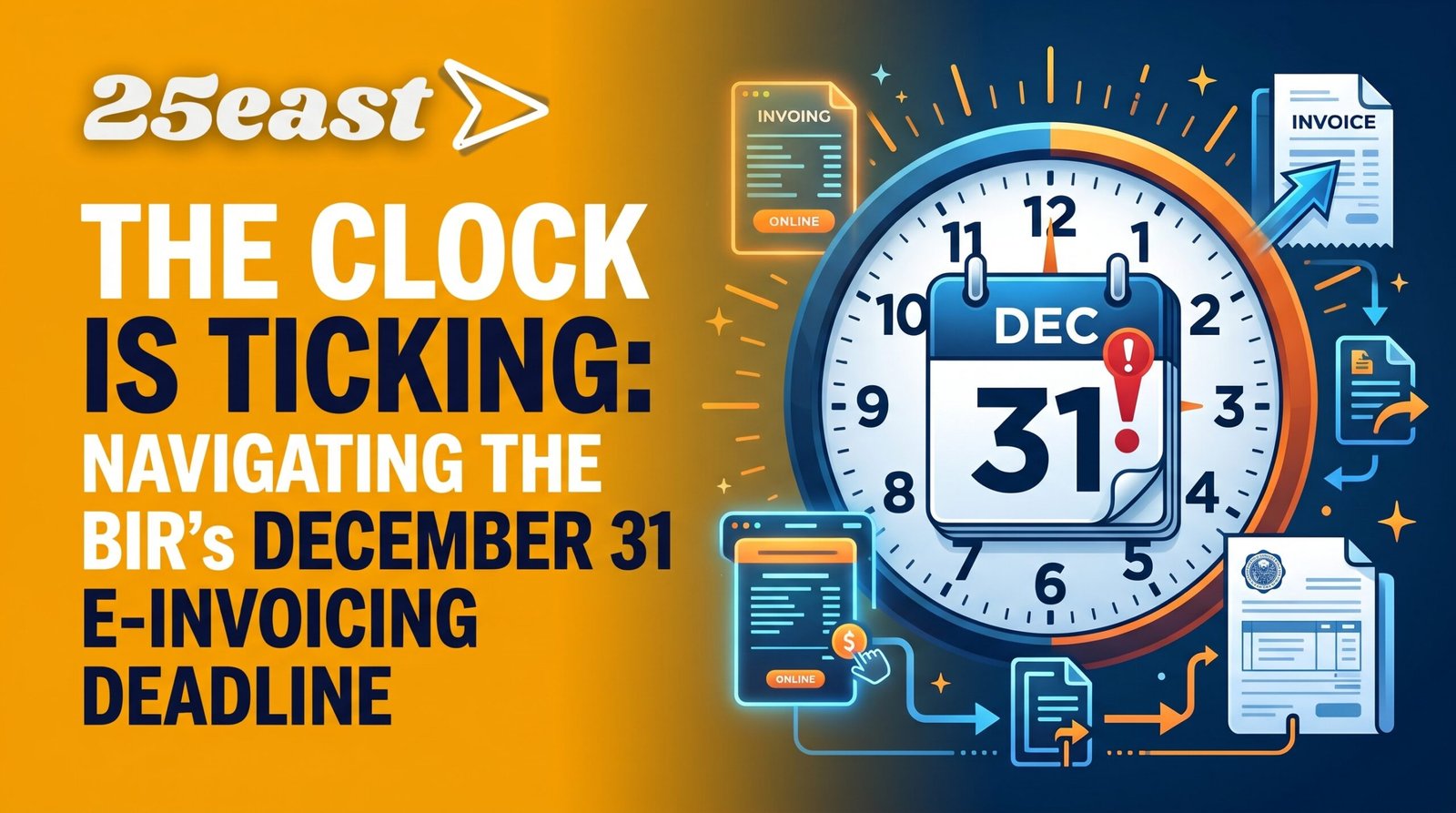
With the December 31 deadline for compliance fast approaching, businesses can no longer afford a wait-and-see approach. Transitioning away from traditional paper-based receipts to a certified electronic invoice system requires technical integration, regulatory clearances, and operational training.
Here is what your business needs to understand about the mandate, who must comply, and the concrete steps required before the year wraps up.
1. What Is the BIR E-Invoicing (EIS) Mandate?
Under the authority of the Tax Reform for Acceleration and Inclusion (TRAIN) Law and reinforced by subsequent BIR revenue regulations and the Ease of Paying Taxes (EOPT) Act, covered taxpayers are required to:
-
Issue e-Invoices/e-Receipts to their customers in real time or near real-time.
-
Transmit digital sales data directly to the BIR’s Electronic Invoicing/Receipting System (EIS) via an Application Programming Interface (API) or approved secure portals.
-
Digitally store transaction records within a compliant, tamper-proof environment for the statutory preservation period.
This initiative is designed to eliminate the circulation of fraudulent invoices, streamline VAT reconciliation, and automate government tax audits.
2. Who Is Required to Comply by December 31?
While the BIR envisions e-invoicing across all commercial entities in the long term, the primary focus and enforcement priorities for this year’s December 31 deadline center on:
-
Large Taxpayers Service (LTS) Registered Entities: Multinational corporations, commercial banks, and top domestic corporations flagged under the BIR’s Large Taxpayers list.
-
Exporters of Goods and Services: Businesses engaged in the export of goods or service exports (such as IT-BPO enterprises, offshore software development centers, and logistics firms).
-
E-Commerce Marketplaces & Online Merchants: Digital platforms and merchants operating in the fast-growing online ecosystem.
-
Taxpayers Under Specific RDO Rollout Directives: Selected business categories designated by targeted Revenue District Offices to complete pilot phase onboarding.
Even if your company is not categorized under the immediate priority list, early adoption protects your organization from future implementation bottlenecks and vendor integration hurdles.
3. The 3 Technical Hurdles Businesses Face
Complying with the EIS is not as simple as exporting an invoice as a PDF and emailing it to a client. The BIR requires structured, verified data exchanges.
The three biggest hurdles companies face during this transition include:
-
Software Compatibility & CAS Updates: If your business utilizes an ERP or a Computerized Accounting System (CAS) like SAP, NetSuite, Oracle, Xero, or QuickBooks, it must either be configured with a custom API middleware or certified through an updated BIR system permit.
-
Standardized JSON Schema: Sales data transmitted to the BIR must match rigid, technical JSON formatting rules specified in the BIR EIS developer guidelines. A missing mandatory field or incorrect tax code will result in transmission rejection.
-
Strict Timelines for Reporting: Electronic sales data must typically be submitted to the BIR within the mandated window (often within three days of transaction issuance), meaning manual reconciliations can no longer keep up.
4. What Happens If You Miss the Deadline?
Failing to comply with the e-invoicing framework by the designated deadline exposes your entity to compounding risks:
-
Compromise Penalties: Recurring administrative fines for failure to issue compliant receipts or invoices.
-
Disallowed Input VAT for B2B Clients: If your issued invoices do not follow the electronic reporting framework, your corporate clients may face challenges claiming their corresponding input VAT deductions—creating commercial friction and reputational damage.
-
Heightened Audit Scrutiny: Entities that miss digital reporting deadlines automatically flag higher risk profiles on the BIR’s internal compliance scorecards, increasing the likelihood of an audit or a Letter of Authority (LOA).
5. Your Pre-December 31 Action Checklist
To ensure your operations stay uninterrupted as the calendar turns, execute the following steps immediately:
-
Conduct a System Audit: Review your current point-of-sale (POS) systems, billing engines, or accounting software. Can they generate and transmit structured electronic invoice data?
-
Review Invoice Templates: Ensure your digital layouts reflect the primary document terminology under the Ease of Paying Taxes Act (e.g., using “Invoice” as the primary document rather than legacy Official Receipts for services).
-
Engage Technical & Tax Experts: Coordinate between your internal IT team and corporate tax advisors to bridge the gap between technical code and BIR compliance regulations.
How 25east Corp. Can Help You Transition Seamlessly
Transitioning to an e-invoicing ecosystem does not have to disrupt your daily business operations.
At 25EAST, we specialize in comprehensive Accounting, Tax Compliance, and Strategic Business Consulting. We help local businesses, startups, and foreign subsidiaries navigate the full lifecycle of the BIR’s e-invoicing requirements:
-
E-Invoicing Readiness Assessments: We audit your existing billing processes and accounting systems to pinpoint structural compliance gaps.
-
System & Workflow Configuration: Our consultants guide your team through software modifications, ERP integration, and the selection of compliant API middleware tailored to the BIR’s JSON transmission requirements.
-
Government Permits & Documentation: We handle the administrative and regulatory clearances required by your registered Revenue District Office (RDO), ensuring your permits are up to date.
-
Ongoing Accounting Retainership: Beyond implementation, our monthly accounting and tax retainers ensure your recurring digital filings, VAT reporting, and books of accounts remain fully compliant year-round.
Don’t wait for the December 31 rush. Let 25east Corp. handle the technical and regulatory heavy lifting so your leadership can focus on closing the fiscal year strong.
👉 Contact 25east Corp. Today to Schedule Your E-Invoicing Strategy Session