



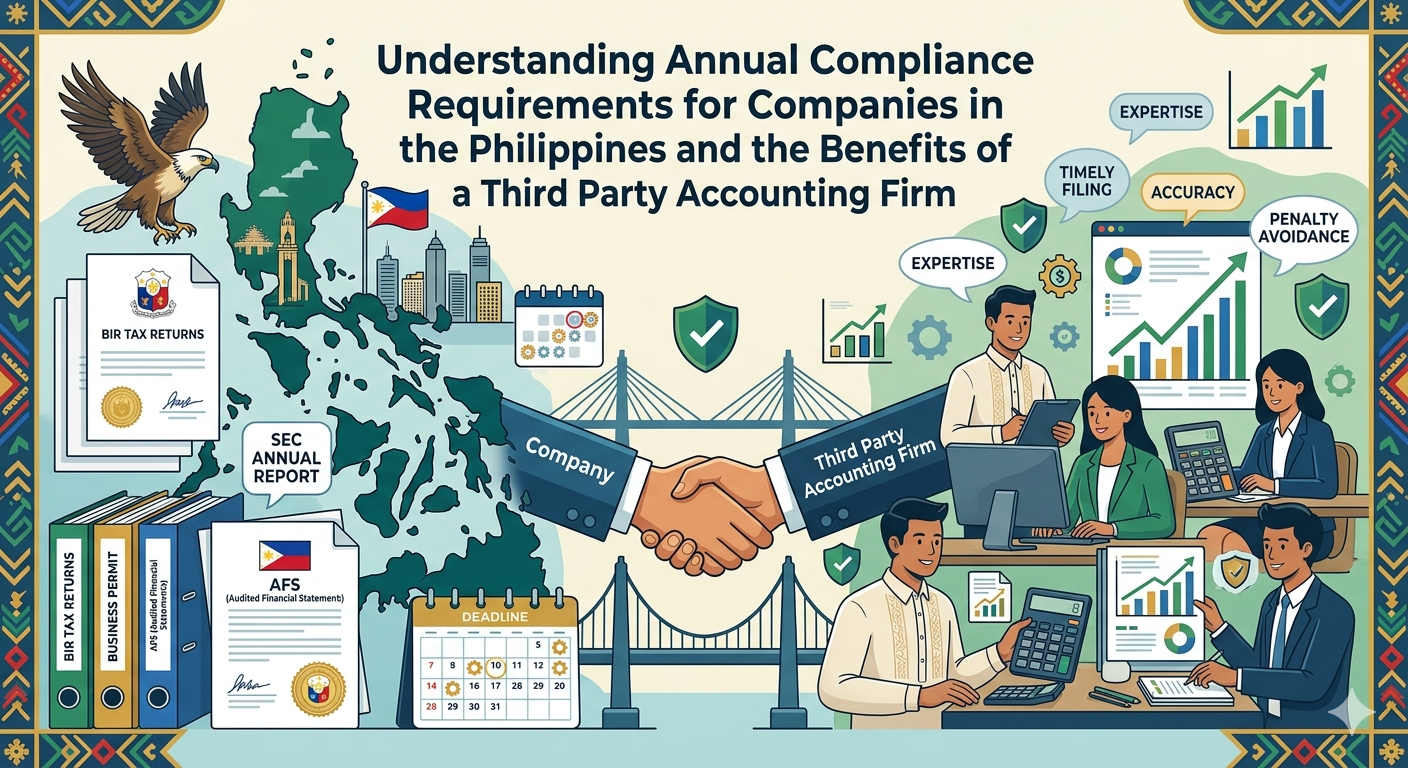
Introduction to Annual Compliance in the Philippines
Annual compliance refers to the essential set of regulations and obligations that companies operating in the Philippines must adhere to, particularly concerning financial reporting and tax obligations. These requirements encompass a variety of tasks and filings necessary to ensure a company meets statutory and regulatory standards set by government authorities such as the Bureau of Internal Revenue (BIR) and the Securities and Exchange Commission (SEC). Compliance checks serve not only as a basis for regulatory enforcement but also as a foundation for businesses to maintain their good standing within the corporate framework.
In the Philippines, companies are required to prepare various reports, including financial statements, tax returns, and annual reports, which must be submitted within specific timeframes. Adherence to these annual compliances is crucial as failure to comply may lead to substantial penalties, fines, or even the suspension of business operations. Furthermore, consistent compliance fosters trust among stakeholders, including customers, investors, and suppliers, promoting a favorable business reputation and sustainability.
To navigate this complex compliance landscape effectively, many businesses turn to third-party accounting firms like 25east. Such firms specialize in understanding these intricate regulations and offer guidance on fulfilling compliance requirements. Outsourcing this function not only alleviates the management burdens placed on internal teams but also provides access to expert knowledge on the latest regulatory changes and best practices. Consequently, leveraging the services of an accounting firm ensures companies remain diligent in their annual compliance efforts while focusing on core business operations.
Key Annual Compliance Requirements for Companies
In the Philippines, companies must fulfill various annual compliance requirements to adhere to local regulations effectively. One of the primary obligations is the preparation and submission of an annual income tax return (ITR) to the Bureau of Internal Revenue (BIR). This document must reflect the financial performance of the company over the past year and is typically due on April 15 of the following year. Failure to submit the ITR on time can lead to penalties, which may include both fines and interest on any unpaid taxes.
In addition to the ITR, corporations are also required to file annual financial statements prepared in accordance with the Philippine Financial Reporting Standards (PFRS). These financial statements serve as an essential tool for stakeholders and regulators, detailing the company’s financial position and performance. The submission deadline for these documents is usually within 120 days after the end of the fiscal year, aligning with other statutory declarations.
Furthermore, companies must comply with regulatory reporting, such as the filing of the General Information Sheet (GIS) with the Securities and Exchange Commission (SEC). This requirement entails submitting a summary of the named officers, directors, and stockholders of the corporation annually. The GIS is generally due within 30 days after the annual stockholders’ meeting. Missing these deadlines can result in administrative fines and further complications with regulatory authorities.
Non-compliance with these annual requirements can have serious repercussions, including the risk of additional penalties and legal troubles for the business. To navigate these obligations effectively, many companies opt to hire an accounting firm, like 25east, that specializes in annual compliances. These firms possess the expertise and experience needed to ensure that all requirements are met timely, thereby allowing business owners to focus on their core operations without the stress of regulatory compliance.
Understanding the Role of the Bureau of Internal Revenue (BIR)
The Bureau of Internal Revenue (BIR) plays a critical role in ensuring that companies in the Philippines adhere to annual compliance requirements. As the principal revenue collection agency of the Philippine government, the BIR is tasked with enforcing tax laws and ensuring that businesses fulfill their tax obligations. The scope of the BIR’s regulatory authority extends to the assessment, collection, and enforcement of all forms of taxes, including income taxes, value-added taxes, and other excise taxes.
Companies must comply with various documentation processes mandated by the BIR. These include the timely submission of tax returns, financial statements, and other relevant documents that reflect a business’s financial activities throughout the fiscal year. Failure to comply with these requirements can lead to penalties, interest charges, and even legal repercussions. Thus, understanding the documentation needed for compliance is essential for all corporations operating in the country.
Furthermore, the significance of fulfilling tax obligations cannot be overstated. Compliance with BIR regulations not only helps mitigate risks of penalties but also enhances a company’s credibility in the market. By maintaining good standing with the BIR, businesses can establish trust with stakeholders, attract potential investors, and foster better relationships with clients. To navigate the complexities associated with tax regulations and ensure proper compliance, many companies opt to engage a third-party accounting firm such as 25East. This allows businesses to allocate their resources more efficiently while concentrating on core operations while ensuring that they meet their annual compliance requirements with the BIR.
Common Challenges Faced by Companies in Staying Compliant
Compliance with annual requirements in the Philippines poses various challenges for companies, particularly for small to medium enterprises. One significant hurdle is the complexity of regulations surrounding annual compliances. The legal framework governing businesses, including the requirements set forth by the Bureau of Internal Revenue (BIR), can be intricate and often requires specialized knowledge that many business owners do not possess. This complexity can lead to misunderstandings and unintentional non-compliance, resulting in penalties or legal issues.
Additionally, tax laws are subject to frequent changes, which can further complicate compliance efforts. Companies must remain proactive in keeping abreast of these changes to ensure that they understand their obligations under the current regulations. For many organizations, staying updated with legislative changes is a cumbersome task, often taking time away from their core business operations. Without the assistance of a qualified accounting firm, navigating these updates becomes even more challenging.
The administrative burden is another significant challenge that companies face when attending to their annual compliance requirements. Business owners often find themselves overwhelmed by the paperwork and documentation necessary for adherence to the BIR rules. This burden is exacerbated when companies lack adequate accounting support, leading to errors and omissions in filings. Furthermore, the pressure to maintain compliance can detract from a company’s ability to focus on growth and operational efficiency. Employing an accounting firm such as 25east can alleviate this burden by providing expert guidance and streamlined processes, allowing business owners to devote their attention to strategic initiatives.
Benefits of Engaging a Third-Party Accounting Firm
Engaging a third-party accounting firm, such as 25east, can provide significant advantages for companies looking to fulfil their annual compliance requirements. One of the primary benefits of hiring an external accounting firm is the alleviation of the burden associated with compliance tasks. Managing annual compliances can be complex and time-consuming, especially for businesses that may not have the requisite knowledge or resources in-house. By outsourcing these responsibilities to a specialized firm, companies can concentrate on their core operations while being assured that their compliance is being handled effectively.
Moreover, third-party accounting firms often possess invaluable expertise in navigating the intricate landscape of regulations. These firms are well-versed in the requirements set forth by the Bureau of Internal Revenue (BIR) and other regulatory bodies. Their knowledge enables them to efficiently interpret laws and guidelines, ensuring that businesses remain compliant with all necessary regulations. This focus on compliance helps prevent any misunderstandings or oversights that could lead to penalties or other legal complications.
Additionally, hiring an accounting firm can prove to be a cost-effective strategy for managing compliance. By leveraging the services of professionals who specialize in accounting and compliance, businesses can avoid the financial burden of fines and penalties associated with non-compliance. A proactive approach taken by third-party firms can lead to improved financial health for companies, offering peace of mind and allowing for better financial planning and decision-making. In conclusion, utilizing a third-party accounting firm not only aids in ensuring compliance with annual requirements but also fosters a more streamlined and error-free financial management process for businesses.
Cost-Effectiveness of Outsourcing Accounting Services
Outsourcing accounting services to a third-party accounting firm has become a strategic choice for many companies in the Philippines, particularly in light of pressing annual compliance requirements such as filing with the Bureau of Internal Revenue (BIR). One of the foremost benefits of this approach is cost-effectiveness. By leveraging the expertise of an accounting firm, businesses can significantly reduce overhead costs associated with maintaining an in-house accounting department.
When companies choose to manage their accounting internally, they incur various expenses, such as employee salaries, benefits, and training costs, in addition to investing in accounting software and other tools. Conversely, an outsourcing arrangement with a third-party firm allows businesses to convert fixed costs into variable costs, paying only for the services they require at any given time. This flexibility can lead to substantial savings, enabling companies to allocate resources more effectively towards growth initiatives.
Moreover, accounting firms typically employ skilled professionals with specialized knowledge in compliance and reporting standards. This high level of expertise ensures that annual compliance requirements are met accurately and timely, ultimately reducing the risk of financial misstatements and penalties from regulatory bodies. Engaging a professional accounting firm can provide businesses with insights into best practices for financial management, which can improve operational efficiency.
Furthermore, by outsourcing accounting tasks, companies free up internal resources, allowing their staff to concentrate on core business functions rather than administrative tasks. As a result, firms that partner with third-party accounting services often enjoy improved productivity and the ability to respond more agilely to changing market conditions. In conclusion, the financial advantages, coupled with enhanced operational efficiency, make outsourcing accounting services an attractive proposition for businesses aiming to navigate the complexities of annual compliance in the Philippines.
Choosing the Right Third-Party Accounting Firm
Selecting the appropriate third-party accounting firm is a critical decision that can significantly impact a company’s compliance with annual requirements, particularly concerning the Bureau of Internal Revenue (BIR) regulations and other local laws. Companies should prioritize several key factors when making this choice to ensure their accounting needs are adequately met.
Firstly, specialization is a vital aspect to consider. Different firms may possess varying areas of expertise, such as tax accounting, payroll management, or financial forecasting. Companies should seek out an accounting firm that specializes in their particular industry, as such firms will have a deeper understanding of the unique challenges and compliance requirements pertinent to that sector.
Secondly, the reputation of the accounting firm is essential. Businesses can gauge a firm’s reputation through online reviews, testimonials, or by seeking recommendations from peers in the industry. A well-regarded accounting firm will likely have a track record of successfully assisting businesses with their annual compliances, thus minimizing the risk of errors in tax filing or financial reporting.
Service offerings are another crucial factor. A comprehensive accounting firm should offer a range of services that extend beyond simple bookkeeping. It is advantageous for a company to engage with a firm that provides strategic advisory services alongside traditional accounting functions, as this can add significant value in navigating complex financial landscapes.
Lastly, feedback from existing clients can provide insights into what it is like to work with a particular accounting firm. Proof of client satisfaction often reflects a firm’s capability in not just managing compliance, but also fostering a collaborative relationship that can enhance the financial decision-making of the client company. Thus, taking the time to evaluate these factors will aid organizations in making an informed decision about which accounting firm will best meet their annual compliance needs.
Ensuring Effective Communication with Your Accounting Firm
The foundation of a successful partnership with any accounting firm lies in effective communication. Clear channels of dialogue facilitate an environment where expectations are understood, transparency is upheld, and compliance goals are successfully met. Establishing these communication protocols is particularly important for businesses navigating annual compliances in the Philippines, such as the regulations set forth by the Bureau of Internal Revenue (BIR).
To begin, it is crucial to set clear expectations with your chosen accounting firm. This involves discussing specific compliance deadlines, necessary documentation, and the accounting processes involved. Clarity regarding roles and responsibilities mitigates the risk of miscommunication or oversight. Outline what your organization requires from the accounting firm and ensure that the firm’s offerings align with these needs. Documenting these points can also help in referencing during future discussions.
Transparency is another essential aspect of communication. Businesses should encourage their accounting firm to provide regular updates on compliance statuses and any pertinent changes in regulations. This approach not only promotes trust but also ensures that all parties remain aligned throughout the year. Changes in guidelines from the BIR, for instance, may directly impact annual compliance requirements; thus, being proactive is vital.
Collaboration is key when it comes to achieving compliance goals. Regular meetings should be scheduled to discuss progress, address questions, and review strategies. Utilizing digital tools that allow for real-time sharing of documents can enhance this communication and ensure that all stakeholders are well-informed. By fostering a collaborative environment, businesses can optimize how they work with their accounting firm, leading to improved effectiveness in handling annual compliances and overall financial management.
Conclusion: Navigating Compliance with Confidence
In examining the annual compliance requirements for companies operating in the Philippines, it is evident that a clear understanding of these obligations is paramount for maintaining legal standing and operational efficiency. Companies must remain vigilant in adhering to the various mandates set forth by the Bureau of Internal Revenue (BIR) and other regulatory agencies to avoid penalties and ensure smooth business operations.
Engaging the services of a reputable accounting firm, such as 25east, can greatly simplify this complex landscape. Such firms specialize in navigating the intricacies of annual compliances, ensuring that companies can focus on their core business activities while leaving the intricacies of compliance management in capable hands. The expertise provided by a seasoned accounting firm not only facilitates timely tax filings and necessary documentation but also enhances operational resilience through strategic financial planning and reporting.
Furthermore, an accounting firm adept in handling compliance also brings insights into best practices, which can be crucial for businesses looking to optimize their processes. They equip companies with the knowledge needed to effectively manage their obligations, thus nurturing a culture of compliance and accountability. This not only fosters trust with stakeholders but also promotes long-term sustainability.
As businesses navigate the complexities of the Philippine financial landscape, leveraging the expertise of a third-party accounting firm emerges as a wise investment. Companies can confidently tackle their annual compliance obligations by doing so, knowing they are supported by professionals who understand the nuances of BIR regulation and compliance requirements. Overall, this partnership not only aids in fulfilling mandatory requirements but also contributes to building a robust framework for future success.