



Introduction to Employment Solutions in the Philippines
The Philippines has emerged as a promising destination for companies seeking to hire remote staff. With a rich pool of talented professionals and an increasing trend among businesses globally to source international talent, the demand for effective employment solutions in the region has never been greater. Companies are exploring various paths to tap into this market, particularly in light of the country’s unique legal and business environment.
One popular approach for hiring staff in the Philippines involves utilizing an Employer of Record (EOR) system. An EOR serves as a third-party entity that handles the complexities of employment laws and regulations on behalf of the hiring company. This solution allows businesses to quickly integrate remote employees into their teams without the need for extensive knowledge of local employment laws or the burdensome process of business registration and company formation.
Alternatively, some companies may opt to establish a local entity in the Philippines. Setting up a local entity requires navigating the intricate legalities associated with company formation, which includes obtaining necessary licenses and permits, registering for tax purposes, and complying with labor laws. While this option offers complete control over operations and direct employer status, it demands significant time, financial investment, and an in-depth understanding of the Philippine employment landscape.
In this comprehensive guide, we will explore both options—employing through an EOR versus setting up your own entity. By examining the advantages and potential pitfalls of each approach, companies can make informed decisions that align with their operational goals and strategic frameworks when hiring in the Philippines.
What is an Employer of Record (EOR)?
An Employer of Record (EOR) is a professional service model whereby a third-party organization manages employment responsibilities for another company. This arrangement allows businesses to engage employees without the need to establish a legal entity, which can often be a cumbersome and time-consuming process. By utilizing an EOR, companies can streamline operations and focus on their core competencies while the EOR takes care of various human resource functions.
The EOR’s primary function is to handle payroll, tax compliance, employee benefits, and adherence to local labor laws. This significantly reduces the administrative burden associated with business registration and company formation, as companies leveraging EOR services avoid the complexities of navigating local regulations independently. The EOR ensures that employees are paid accurately and on time, manages all tax withholdings, and files necessary governmental paperwork to ensure compliance with local employment laws.
In addition to payroll and taxation, EORs also provide benefits management, which encompasses health insurance, retirement plans, and other employee perks. This is particularly vital for businesses that may not have the capacity or infrastructure to offer comprehensive employee benefits, which are often key to attracting and retaining talent. Furthermore, partnering with an EOR helps mitigate risks related to employment, as they assume liability for compliance with labor regulations.
In essence, an Employer of Record serves as an intermediary that helps businesses simplify their workforce management processes. By outsourcing these vital HR functions, companies, especially those looking to expand into new territories like the Philippines, can scale quicker and with greater confidence, allowing them to concentrate on strategic goals without the distraction of complex employment regulations.
Setting Up Your Own Entity: An Overview
Establishing a business entity in the Philippines is a multifaceted process that requires careful consideration and adherence to local regulations. The first step in company formation is defining the right business structure. Options typically include sole proprietorships, partnerships, and corporations, each with distinct legal implications, investment requirements, and operational controls. An understanding of these structures is crucial, as it will determine not only tax obligations but also liability matters.
Once the appropriate business structure is identified, the next phase involves drafting the necessary incorporation documents. This includes a name reservation with the Securities and Exchange Commission (SEC) to ensure that your chosen business name is unique. Following this, you must prepare a Articles of Incorporation and By-Laws and submit them along with other requirements to the SEC for approval. This step signifies the legal establishment of your entity.
After acquiring SEC approval, the subsequent requirement is to secure a Mayor’s Permit from the local government unit where your business will operate. This involves compliance with zoning regulations and health and safety standards. Further, you need to register with the Bureau of Internal Revenue (BIR) to obtain a Tax Identification Number (TIN) and necessary permits for your business operations. Such registration not only facilitates legitimate operations but also clarifies tax obligations and responsibilities.
Additionally, ongoing compliance with reporting requirements, such as filing annual returns, is essential for maintaining your entity’s good standing. While setting up your own entity allows for greater control and autonomy, it also demands a thorough understanding of the associated legal and regulatory frameworks. Hence, engaging legal experts or consultants and leveraging resources that provide insights into business registration in the Philippines can be beneficial in navigating this complex process.
Advantages of Utilizing an Employer of Record
In today’s globalized market, businesses frequently seek to expand their operations and tap into talent worldwide. One effective approach to hiring remote staff in the Philippines is through an Employer of Record (EOR). Partnering with an EOR offers numerous advantages compared to setting up an entity or handling business registration independently.
One of the primary benefits is faster onboarding. EORs streamline the hiring process, allowing companies to onboard talent quickly. This is particularly beneficial for businesses eager to implement swift growth strategies without enduring the long timelines associated with company formation and local compliance regulations.
Moreover, utilizing an EOR significantly reduces the administrative burden on internal HR teams. EORs manage all aspects of employment, including payroll, taxes, and compliance with local labor laws. This enables organizations to allocate resources more efficiently, allowing them to focus on core business activities rather than navigating the complexities of employer obligations.
Compliance assurance is another pivotal advantage of using an EOR. With evolving labor laws and regulations, maintaining compliance can be challenging for organizations operating internationally. EORs are equipped with extensive knowledge of local employment laws, ensuring that clients adhere to these regulations without facing unexpected penalties.
Flexibility in scaling teams is another significant advantage provided by an EOR. Businesses can quickly adjust their workforce based on project demands or market changes without the lengthy processes associated with business registration and establishing a formal entity. This agility can provide a crucial competitive edge in highly dynamic sectors.
Real-world examples highlight these benefits: companies opting for EOR have successfully entered new markets, reduced hiring times by weeks, and transformed recruitment into a seamless process, solidifying the EOR’s role as a valuable partner in the global hiring landscape.
Cons of Using an Employer of Record
Utilizing an Employer of Record (EOR) can indeed streamline the process of business registration and employee hiring in foreign markets, such as the Philippines. However, it is essential to consider the potential downsides associated with this arrangement. One of the most significant drawbacks is the higher cost involved in hiring staff through an EOR. Typically, companies seeking to employ through an EOR must pay premium fees, which can significantly affect overall business expenditure, particularly for startups and small businesses.
Another critical concern is the limitation on control over employee management. With an EOR, the employer effectively hands over human resource responsibilities to a third-party organization. This structure can result in a disconnect between company culture and employee engagement, as the EOR handles administrative tasks, payroll, compliance, and benefits. Consequently, companies may find it challenging to maintain a direct influence on workforce motivation, performance, and training, potentially leading to misalignment in organizational values and goals.
Furthermore, dependency on the EOR’s services may raise risks related to service quality and responsiveness. Relying on a third party for critical functions such as payroll processing and compliance management can make businesses vulnerable. Should issues arise—such as delays in payroll or incorrect tax filings—companies might face reputational damage or legal repercussions due to inadequate handling by the EOR. This can result in financial repercussions that undermine the very benefits the company sought to achieve by outsourcing these tasks.
In conclusion, while using an Employer of Record can simplify the company formation process in the Philippines, potential downsides such as higher fees, limited control over employee management, and dependency on third-party services should be carefully weighed against the benefits.
Pros of Setting Up Your Own Entity
Establishing your own business entity in the Philippines provides several significant advantages for companies looking to expand their operations. One of the primary benefits is the greater control over business operations. By forming your own entity, you can tailor your business model to suit the specific needs of the local market, allowing for more strategic decision-making that aligns with your company’s goals and policies.
Moreover, setting up your own entity can provide opportunities for tax advantages. Depending on the structure of your business, there may be various incentives available that can lead to tax reductions or exemptions. Engaging with local tax authorities and experts can uncover strategies for optimizing your tax obligations, thereby enhancing overall profitability.
Another significant advantage of forming an entity in the Philippines is the ability to cultivate a stronger local presence and brand identity. Establishing a business entity allows you to directly engage with local stakeholders, including customers, suppliers, and partners. This local engagement can lead to improved customer loyalty and trust, which are crucial for long-term success in a competitive landscape.
As your own entity, you can also establish local partnerships, hire a workforce tailored to your needs, and directly manage compliance with local regulations. This can enhance operational efficiency and foster a more cohesive corporate culture aligned with the local community’s values and expectations. In this way, company formation not only contributes to your operational strategy but also plays a pivotal role in developing a sustainable and prominent local brand.
Challenges in Setting Up Your Own Entity
Establishing a business entity in the Philippines entails numerous challenges that can potentially hinder the growth of a startup. One of the foremost disadvantages is the high cost associated with company formation. Initial expenses often include government fees, legal services, and operational infrastructure. For small businesses or startups with limited capital, these costs can be prohibitively expensive, making the prospect of business registration a daunting task.
In addition to financial considerations, entrepreneurs face significant regulatory complexities. Navigating the Philippine business landscape requires comprehension of a myriad of rules and regulations. Compliance with these legal requirements can be intricate, often necessitating expert legal counsel. Failure to adhere to these obligations can result in penalties or even the dissolution of the business, thus complicating the already challenging journey of establishing an entity. This requirement for ongoing compliance not only demands time and resources but also diverts focus from core business operations.
Another significant disadvantage lies in the lengthy timelines associated with the business registration process. Entrepreneurs frequently encounter delays in obtaining the necessary permits and licenses, a situation exacerbated by bureaucratic inefficiencies. These delays can postpone the operational launch of a business, which may adversely affect market entry and competitiveness. In contrast, businesses utilizing the services of an employer of record (EOR) can avoid these cumbersome processes, allowing for immediate engagement with the workforce without the associated legal and logistical burdens.
Given these challenges—high setup costs, complexities in compliance, and prolonged registration timelines—many businesses may find that seeking an EOR serves as a more efficient and effective strategy. This route not only facilitates swift market entry but also alleviates the administrative burdens that come with setting up a new entity.
Comparative Analysis: EOR vs. Own Entity
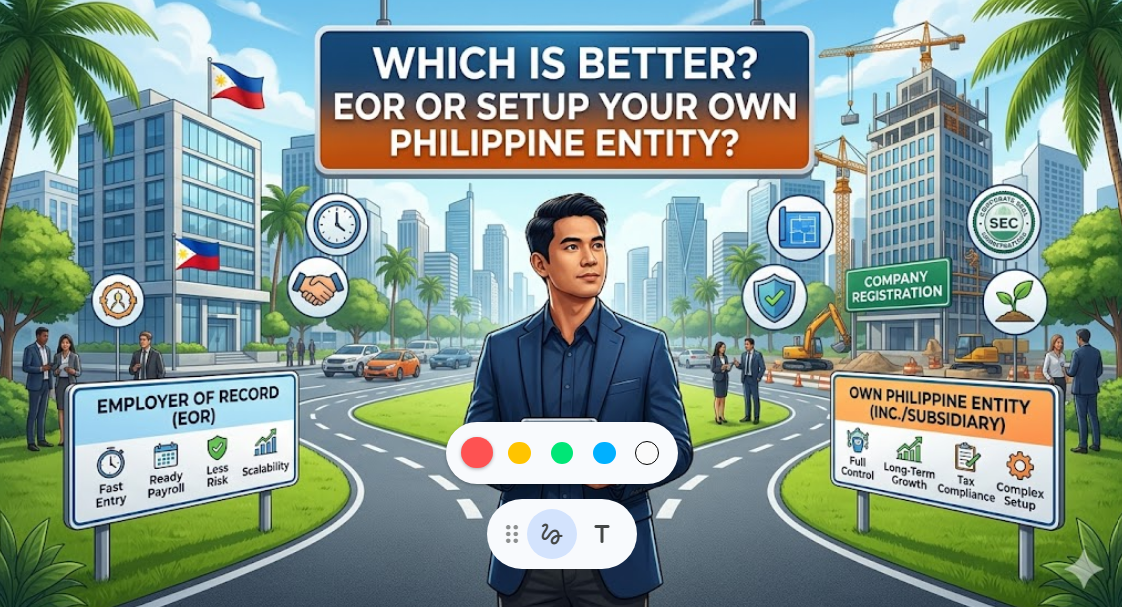
When evaluating the options of utilizing an Employer of Record (EOR) versus establishing a company through business registration, it is crucial to consider the unique advantages and disadvantages associated with each approach. This analysis aims to provide a clear framework for understanding which method aligns more closely with your specific business objectives.
One of the most notable advantages of using an EOR is the simplified onboarding process. By engaging an EOR, businesses can swiftly employ personnel without the complexities inherent in company formation. This can significantly reduce the time spent on administrative tasks and legal compliance. Furthermore, an EOR often provides localized knowledge, assisting companies in navigating local labor laws, tax regulations, and employment practices which may be challenging for foreign entities to comprehend. This support can ensure that businesses remain compliant in a fast-evolving regulatory environment.
Conversely, setting up your own entity through business registration allows for greater control over operations, brand management, and financial structures. Companies that establish a legal entity can benefit from a more profound understanding of local market dynamics and potentially secure better financial incentives and tax benefits. However, embarking on this path can require substantial investment in time and resources, including legal fees, initial capital outlay, and ongoing compliance requirements.
Each approach carries potential long-term implications. Utilizing an EOR can be ideal for businesses seeking to test the market with minimal commitment, while establishing your own entity may be more suited for those aiming for an enduring presence. Ultimately, the optimal choice will depend on a careful assessment of specific business needs, financial resources, and strategic goals. Thoroughly evaluating these factors will aid in making a well-informed decision regarding the most effective method for expanding your business in the Philippines.
25East’s Expertise in EOR and Company Formation
In the ever-evolving landscape of global business operations, understanding the nuances of employer of record (EOR) services and company formation is essential for organizations looking to establish a presence in the Philippines. 25East stands out as a leader in this domain, offering comprehensive support tailored to the unique needs of each client. With a wealth of experience, 25East provides invaluable insights that streamline the process of business registration and entity setup.
One of the critical advantages of partnering with 25East is its multifaceted approach to EOR services. They ensure compliance with local labor laws, allowing companies to hire employees without the need for a registered entity. This is particularly beneficial for businesses aiming to enter the Philippine market quickly and efficiently. Their EOR solutions encompass payroll management, tax compliance, and employee benefits administration, alleviating administrative burdens and allowing clients to focus on core operations.
In addition to EOR services, 25East excels in company formation, guiding businesses through the complexities of legal and regulatory requirements for establishing a legal entity in the Philippines. Their team of legal experts provides consultation and strategic advice, ensuring that all aspects of the registration process are handled seamlessly. From drafting necessary documentation to liaising with local authorities, 25East emphasizes transparency and thoroughness in every step.
Moreover, 25East offers ongoing operational support, crucial for the success of newly formed entities. This support includes assistance with day-to-day operations, compliance management, and scaling the workforce as needed. By leveraging their expertise in both employer of record solutions and company formation, 25East not only simplifies the setup process but also enhances the long-term viability of businesses in a competitive market.