

Introduction In today’s increasingly globalized workforce, many businesses are turning to the Philippines for access to a talented pool of remote workers. The cost-effectiveness and professionalism exhibited by Filipino workers make them a viable option for companies looking to expand their operations. However, when considering the employment of remote workers in the Philippines, businesses face two primary options: establishing their own entity through a Philippine company setup or opting for an Employer of Record (EOR) service. Each option has its set of advantages and implications that can significantly impact overall business operations. The decision to set up a Philippine entity involves navigating the complexities of Philippine business registration and incorporation processes. This approach gives businesses full control over their hiring and operational decisions, enabling them to customize the employment setup according to their strategic goals. However, this route requires thorough knowledge of local regulations, an understanding of labor laws, and adherence to various compliance measures, which can be daunting for many foreign companies. On the other hand, leveraging an EOR service simplifies the process by managing all aspects of workforce management. This allows businesses to bypass the intricacies of Philippine company setup while still enjoying the benefits of hiring local talent. The EOR takes on the responsibilities of payroll, compliance, and employee benefits, thus reducing administrative burdens and allowing companies to focus on their core competencies. Understanding the nuances of both options is crucial for organizations aiming to establish a robust presence in the Philippines. The right choice will ultimately facilitate smoother operations and elevate overall business success. As we explore in further sections, evaluating factors such as costs, compliance, and operational efficiency will help determine which approach is best suited for employing remote workers in the Philippines. What is a Philippine Entity? A Philippine entity refers to a legal formation registered within the Philippines, which allows businesses to operate and establish a presence in the country. Typically, this can take the form of a corporation, partnership, or a sole proprietorship. Establishing a Philippine entity is a strategic decision for businesses wishing to tap into the growing market and workforce of the country. The process of establishing a Philippine company begins with identifying the appropriate business structure. A corporation is the most common structure due to its limited liability features and ability to separate personal and business finances. Once a structure is decided, the business must undergo several steps for registration, which include obtaining a Certificate of Registration from the Securities and Exchange Commission (SEC). Following this initial registration, businesses are also required to secure necessary permits and licenses from various governmental bodies. This involves the application for a Business Permit from the local government unit, registration with the Bureau of Internal Revenue (BIR) for tax identification purposes, and compliance with other regulatory requirements. The registration process can be time-consuming and may require the assistance of legal and financial experts to ensure compliance with local laws. Apart from the registration process, companies must also be aware of their ongoing legal obligations related to labor laws, taxation, and corporate governance. These obligations include adhering to labor standards, timely filing of tax returns, and maintaining statutory records. Businesses opting for Philippine company setup must equip themselves with knowledge of these operational aspects to remain compliant and avoid potential penalties. What is an Employer of Record (EOR) Service? An Employer of Record (EOR) service is a crucial solution for companies seeking to hire remote workers without the complexities associated with establishing a physical presence in another country. An EOR acts as the official employer for remote employees, handling legal employment responsibilities while allowing businesses to focus on their core operations. This arrangement simplifies the hiring process, particularly for those looking to engage a Philippine company setup for their workforce. The services offered by EORs encompass a wide range of employment-related activities, including payroll management, compliance with local labor laws, and benefits administration. By outsourcing these functions to an EOR, companies can reduce the administrative burden typically associated with hiring and managing employees in foreign jurisdictions. This is particularly beneficial for businesses that do not have experience with Philippine business registration or the nuances of local regulations. Moreover, an EOR ensures that employees receive all necessary benefits, such as health coverage, vacation allowances, and retirement plans, compliant with local laws. This level of compliance and care protects both the employees and the employer from potential legal issues. By partnering with an EOR, companies can swiftly navigate the complexities of incorporation and employment laws, thereby facilitating a smooth integration of remote workers into their workforce. Organizations can also benefit from the flexibility offered by EOR services, as these entities are adept at scaling workforce operations quickly to meet changing business demands. Whether a company intends to employ a single contractor or a larger team, utilizing an EOR for hiring and managing remote workers can significantly streamline the overall process, all while ensuring compliance and reducing risk. Pros of Setting Up Your Own Philippine Entity Establishing your own business in the Philippines offers numerous advantages, particularly for companies looking to hire remote workers. One notable benefit is the increased control over operations. By setting up a Philippine entity, you can tailor the business operations to align closely with your global strategy and objectives. This autonomy enables swift decision-making and strategy execution, which can be essential in a competitive market. Another compelling reason for incorporating a Philippine entity is the enhanced brand presence it provides. A local business setup can strengthen your brand’s visibility and credibility among local customers and partners. For instance, a dedicated Philippine entity can foster trust and loyalty among Filipino clients, leading to improved relationships and business opportunities. Moreover, local autonomy is critical when addressing specific market needs. Having a Philippine business registration allows you to adapt your offerings, marketing strategies, and customer service approaches to better suit local preferences and regulations. This flexibility can lead to a significant competitive advantage in meeting the unique demands of the Philippine market. Tax benefits

Registering Your Sole Proprietorship in the Philippines: A Step-by-Step Guide for New & Renewal Applications
Navigating the waters of business registration can feel like a daunting task, especially when it comes to understanding the specifics for sole proprietorships in the Philippines. Whether you’re a new entrepreneur looking to embark on your exciting business journey or a seasoned business owner in need of your annual renewal, this guide will simplify the process and equip you with the knowledge needed to get your sole proprietorship legally recognized and compliant. In the Philippines, a sole proprietorship is the simplest form of business structure, where the business and the owner are essentially the same legal entity. This means you have full control over decision-making, but you also bear unlimited liability for all business debts and obligations. New Sole Proprietorship Registration: Your Journey Begins! Starting a new sole proprietorship requires registering your business name and acquiring the necessary permits. Here’s your comprehensive roadmap: Step 1: Reserve Your Business Name with DTI Your first step is to secure your desired business name. This is done through the Department of Trade and Industry (DTI). You can do this online through the DTI’s Business Name Registration System (BNRS) at https://bnrs.dti.gov.ph/. Be prepared with a few alternative names in case your first choice is already taken. The processing fee is minimal, and you’ll receive your DTI Certificate of Registration upon approval. This certificate is typically valid for five years. Step 2: Obtain Barangay Clearance With your DTI certificate in hand, head to your local Barangay Hall where your business is located. You’ll need to secure a Barangay Clearance, which signifies that your business is allowed to operate in that specific community. The requirements usually include a copy of your DTI certificate, proof of address (like a utility bill or lease contract), and a valid ID. Step 3: Secure Mayor’s Permit or Business Permit Next, make your way to the City or Municipal Hall’s Business Permits and Licensing Office (BPLO). Here, you’ll apply for your Mayor’s Permit or Business Permit. The requirements can vary slightly depending on the local government unit (LGU), but generally involve: Application Form: Obtainable from the BPLO. DTI Certificate of Registration: Copy and original for verification. Barangay Clearance: Copy and original for verification. Lease Contract (if applicable): If you’re renting your business space. Occupancy Permit: From the Engineering Office (if applicable). Fire Safety Inspection Certificate: From the Bureau of Fire Protection (BFP). Sanitary Permit: From the City/Municipal Health Office (if applicable). Other specific requirements: Based on your line of business (e.g., environmental clearance, food handler’s seminar, etc.). Upon submission and payment of the necessary fees, the BPLO will process your application and issue your Mayor’s Permit. Step 4: Register with BIR (Bureau of Internal Revenue) Once you have your Mayor’s Permit, it’s time to get registered with the BIR. This step ensures you’re a legitimate taxpayer. Head to the BIR Revenue District Office (RDO) with jurisdiction over your business location. You’ll need to fill out Form 1901 (Application for Registration for Sole Proprietorship). The requirements include: DTI Certificate of Registration: Copy and original for verification. Mayor’s Permit: Copy and original for verification. Lease Contract (if applicable): Copy. Proof of Address: Copy of utility bill or other documents. Valid ID: Copy and original for verification. Payment of Registration Fee: Pay the annual registration fee of P500. After processing, you’ll receive your BIR Certificate of Registration (COR) and your Taxpayer Identification Number (TIN). Step 5: Apply for Books of Accounts and Authority to Print Receipts (ATP) With your BIR COR, you’re now required to maintain proper accounting records. You’ll need to apply for the registration of your Books of Accounts (like general journal, general ledger, sales journal, and purchase journal) at your BIR RDO. You’ll also need to apply for an Authority to Print (ATP) for your official receipts. This allows you to have official receipts printed by accredited printers. Step 6: Register with SSS, PhilHealth, and Pag-IBIG Even if you don’t have employees yet, it’s recommended to register with the Social Security System (SSS), Philippine Health Insurance Corporation (PhilHealth), and Home Development Mutual Fund (Pag-IBIG). This will make the process easier when you do eventually hire employees. You’ll need to fill out the respective application forms and provide copies of your BIR COR and DTI certificate. Renewing Your Sole Proprietorship: Keeping Your Business Compliant Business permits and licenses aren’t permanent. For sole proprietorships, you’ll need to renew certain permits and pay annual fees to remain compliant and avoid penalties. 1. Renew Business Name with DTI: Your DTI Certificate of Registration is valid for five years. You’ll need to renew it before the expiry date to continue using your business name. The renewal process is similar to the new registration and can be done online through the BNRS. 2. Renew Barangay Clearance: Barangay clearance is typically renewed annually. Check with your local Barangay Hall for the specific requirements and timeline for renewal. 3. Renew Mayor’s Permit or Business Permit: Your Mayor’s Permit is also an annual requirement. The renewal period typically falls within the first month of the calendar year (usually January). Be prepared to present your previous Mayor’s Permit, updated Barangay Clearance, and pay the annual business tax and other regulatory fees. 4. Pay Annual BIR Registration Fee: Every year, by January 31, you’re required to pay the annual BIR registration fee of P500. You can pay this at any accredited agent bank or through online payment channels. 5. Keep Records Updated: Continue maintaining your Books of Accounts and ensure your contact details with BIR, SSS, PhilHealth, and Pag-IBIG are current. Make Your Business Registration Journey Seamless with 25East! Feeling overwhelmed by the paperwork, regulations, and multi-agency processing? You’re not alone. Registering a sole proprietorship in the Philippines, whether new or renewal, can be a complex and time-consuming endeavor. Why navigate this intricate path when you can focus your energy on building your dream business? At 25East, we specialize in making business registration a breeze. Our team of experts understands the ins and outs of the Philippine bureaucratic landscape. We can
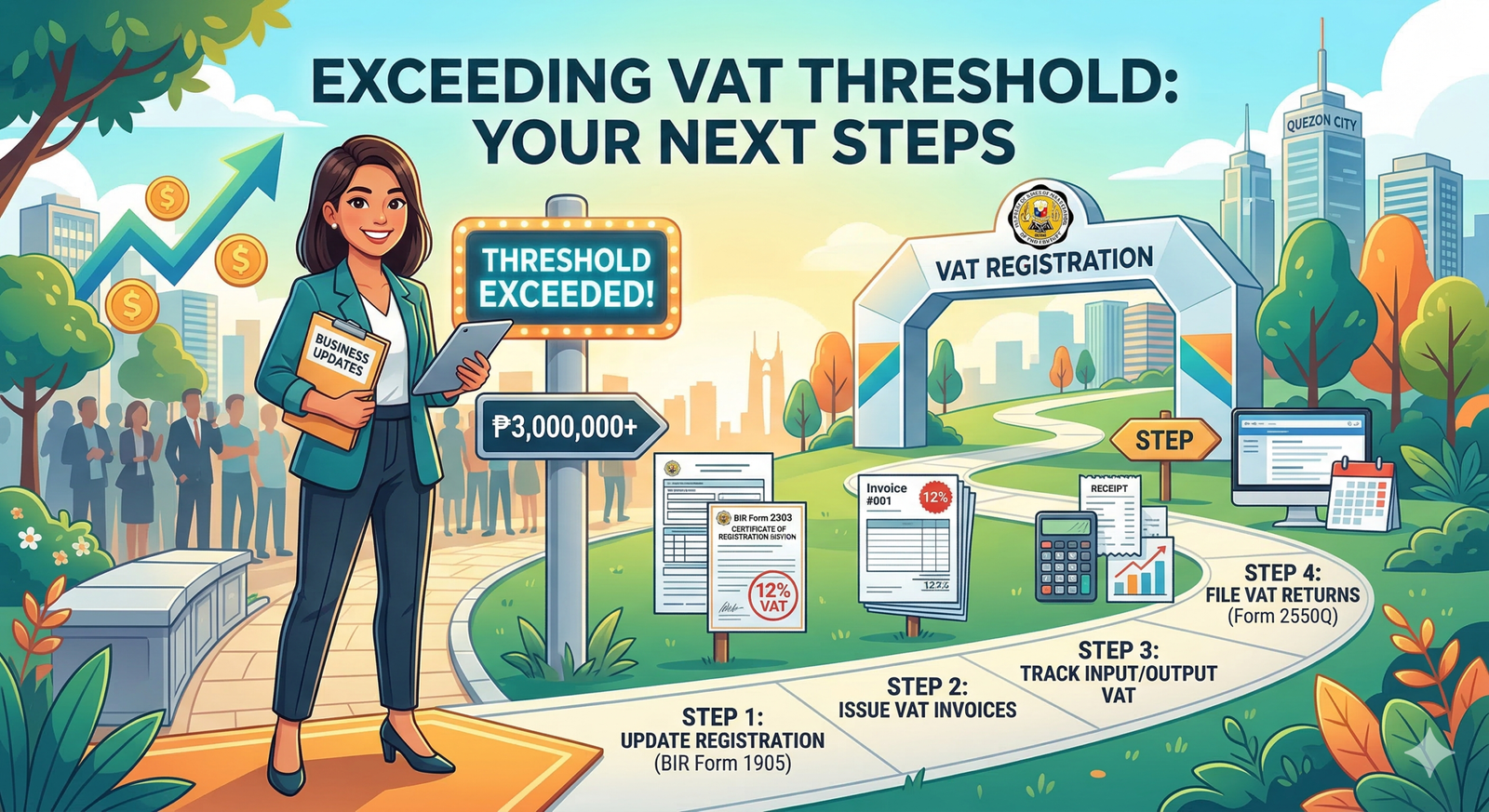
Exceeding VAT Threshold: Your Next Steps
First off, congratulations! Exceeding the ₱3,000,000 mark in the middle of the year means your business is growing and doing incredibly well. However, it is totally understandable to feel a bit overwhelmed right now because it also means your tax obligations are about to change. Under the rules of the Bureau of Internal Revenue (BIR), once your gross sales or receipts exceed ₱3,000,000 within a 12-month period, you automatically lose your Non-VAT exemption. You are now legally required to update your registration from Non-VAT to VAT. Here is exactly what you need to do, grounded in current BIR regulations. 1. Know Your Deadline You must update your registration not later than the last day of the month following the month you exceeded the threshold. > Example: If your gross sales hit ₱3,000,001 on July 15th, you have until August 31st to update your registration to VAT. 2. The Step-by-Step Update Process You will need to visit your Revenue District Office (RDO) to process this transition. Submit BIR Form 1905: Fill out the Application for Registration Information Update (Form 1905) to change your tax type from Percentage Tax (Non-VAT) to Value-Added Tax. Get a New Certificate of Registration (COR): The BIR will issue you a new BIR Form 2303 (COR) reflecting your new status as a VAT-registered taxpayer. Apply for New VAT Invoices: Because of the recent Ease of Paying Taxes (EOPT) Act, the primary document for both goods and services is now the Invoice. You must apply for a new Authority to Print (ATP) to print VAT Invoices. Surrender Old Receipts: You will be required to surrender your unused Non-VAT invoices/receipts for cancellation by the BIR so you don’t accidentally issue them once you are VAT-registered. 3. What Happens If You Don’t Update? It is crucial not to ignore this. If the BIR discovers you exceeded the threshold and failed to register for VAT: You will be held liable to pay the 12% Output VAT on all your sales from the moment you exceeded the threshold. The Catch: Because you were not properly registered, you will not be allowed to claim any Input VAT (the VAT you paid on your purchases) to lower your tax due. You will also face surcharges, interest, and penalties for late registration and non-filing of VAT returns. 4. Important Financial Adjustments Pricing: You will now need to factor the 12% VAT into your selling price (or charge it on top of your current prices). Transitional Input VAT: Ask your accountant about claiming a “Transitional Input Tax.” When you transition to VAT, you are generally allowed to claim a 2% input tax on your beginning inventory of goods, materials, and supplies, which can help lower your first VAT payable. Filing Returns: You will stop filing the Quarterly Percentage Tax (Form 2551Q) and will start filing the Quarterly VAT Return (Form 2550Q). Transitioning to VAT Transitioning to VAT can feel like learning a new language at first, but once you grasp the relationship between Input VAT and Output VAT, it makes perfect sense. At its core, Value-Added Tax (VAT) is designed so that the final consumer pays the tax, but the businesses along the way act as the collection agents for the government. Here is how the mechanics work: 1. Output VAT (What you collect) This is the 12% tax you add to the selling price of your goods or services. Because you are now VAT-registered, you must charge this to your customers. Think of it as: Money you are holding in trust for the BIR. It is not your income. 2. Input VAT (What you pay) This is the 12% tax you are charged when you purchase goods, raw materials, or services from other VAT-registered businesses for your operations. Think of it as: A tax credit or a discount coupon you can use against what you owe the BIR. 3. The Computation The formula to compute what you actually have to pay the BIR is straightforward: Output VAT – Input VAT = VAT Payable If your Output VAT is higher than your Input VAT, you pay the difference to the BIR. If your Input VAT is higher (meaning you bought more than you sold that month), you don’t pay any VAT, and the excess “credit” carries over to the next billing period. Let’s Look at a Real-World Example Imagine you run a furniture manufacturing business. Step 1: Your Purchases (Generating Input VAT) You buy wood, paint, and tools from a VAT-registered hardware store. The base price of the materials is ₱100,000. The hardware store adds 12% VAT: ₱12,000. You pay them a total of: ₱112,000. Your Input VAT credit is: ₱12,000. Step 2: Your Sales (Generating Output VAT) You turn those materials into beautiful dining tables and sell them to a customer. The base price you set for the tables is ₱150,000. You must add 12% VAT to your price: ₱18,000. The customer pays you a total of: ₱168,000. Your Output VAT is: ₱18,000. Step 3: Paying the BIR At the end of the quarter, you calculate what you owe: Output VAT Collected: ₱18,000 Less: Input VAT Paid: ₱12,000 Total VAT Payable to BIR: ₱6,000 The Golden Rule: Receipts are Everything You can only claim Input VAT if you have a valid, BIR-compliant VAT Invoice from your supplier. If you buy from a Non-VAT supplier, or if you lose the invoice, you cannot claim that purchase as an Input VAT credit, which means your VAT Payable will be higher. The Silver Lining: When you were Non-VAT, the VAT you paid to your suppliers was just an unrecoverable business expense. Now that you are VAT-registered, every valid VAT purchase you make actively reduces your tax bill.

BMBE 101: The Ultimate Guide for Micro-Entrepreneurs in the Philippines
If you are running a small business in the Philippines—whether it’s a neighborhood bakery, a local handicraft shop, or an online retail store—every peso counts. To help small businesses survive and thrive, the government enacted the Barangay Micro Business Enterprise (BMBE) Law (Republic Act No. 9178). Despite the massive benefits this law offers, thousands of eligible micro-entrepreneurs operate without taking advantage of it simply because they don’t know it exists or assume the process is too complex. Here is your straightforward, no-nonsense guide to what a BMBE is, why you should register, and exactly how to secure your tax exemptions. What Exactly is a BMBE? A Barangay Micro Business Enterprise (BMBE) is any business entity or enterprise engaged in the production, processing, or manufacturing of products, including agro-processing, trading, and services. Think of it as a special legal status granted to micro-businesses to act as a “seedbed” for Filipino entrepreneurial talent. By reducing the regulatory and financial burden on these small ventures, the government hopes they will eventually grow into larger, job-creating enterprises. The “Big Three” Benefits: Why You Should Care Registering as a BMBE unlocks some of the most powerful legal and financial incentives available to small businesses in the country: Income Tax Exemption: This is the biggest draw. A registered BMBE is 100% exempt from paying income tax on income arising directly from its business operations. This allows you to reinvest your profits directly back into growing your business. Exemption from the Minimum Wage Law: BMBEs are legally allowed to pay their employees below the statutory regional minimum wage. This gives micro-businesses the flexibility to hire staff even when operating on razor-thin margins. (Note: You must still provide your employees with mandatory statutory benefits like SSS, PhilHealth, and Pag-IBIG). Priority Access to Credit & Training: Government financial institutions (like LandBank, DBP, and SB Corp) are mandated to set up special credit windows for BMBEs. Additionally, you get priority access to technology transfer, management training, and marketing assistance from agencies like the DTI, DOST, and TESDA. Do You Qualify? The BMBE Eligibility Checklist To qualify for BMBE status, your business must tick the following boxes: Asset Limit: Your total business assets must not exceed ₱3,000,000.00. This includes cash, equipment, inventory, and assets arising from loans. Importantly, the value of the land where your business office, plant, or equipment is situated is excluded from this ₱3 Million limit. Business Activity: You must be engaged in production, processing, manufacturing, trading, or services. The “Professional” Exception: Businesses that render services in connection with the exercise of a licensed profession (e.g., accounting firms run by CPAs, legal clinics run by doctors) are disqualified from becoming BMBEs. Not a Branch: Your business cannot be a branch, subsidiary, or division of a large-scale enterprise. Step 1: Getting Your BMBE Certificate Thanks to the Go Negosyo Act, BMBE registration is handled by the Department of Trade and Industry (DTI), making the process standardized and completely free of charge. Get your Primary Business Registration: You need your base registration first (DTI for Sole Proprietors, SEC for Corporations/Partnerships, CDA for Cooperatives). Submit the Application: Go to your nearest DTI Negosyo Center with a filled-out BMBE Application Form (Form 01) and your primary registration certificate. You can also apply online via the DTI’s official BMBE portal (bmbe.dti.gov.ph). Receive Your Certificate: If all documents are in order, the DTI will issue your BMBE Certificate of Authority within 15 working days. This is valid for two (2) years and is renewable. Step 2: The Crucial Catch—Registering with the BIR Many entrepreneurs get their DTI BMBE Certificate, hang it on their wall, and assume they are automatically exempt from taxes. This is a dangerous misconception. To actually avail of the income tax exemption, you must register your BMBE status with the Bureau of Internal Revenue (BIR) at your designated Revenue District Office (RDO). The requirements differ slightly depending on whether you are registering a brand new business or updating an existing one. A. For NEW Businesses Registering with the BIR If you are registering your business with the BIR for the very first time, you will apply for your BMBE tax exemption alongside your initial registration. Requirement Description BIR Form 1901 or 1903 Use Form 1901 for Sole Proprietors, or Form 1903 for Corporations/Partnerships. Submit two (2) original copies. BMBE Certificate of Authority 1 photocopy of the certificate issued to you by the DTI. Primary Registration 1 photocopy of your DTI, SEC, or CDA Certificate. Valid ID 1 photocopy of any government-issued ID of the applicant. Sample Invoices/Receipts A clear sample of your proposed receipts/invoices (or buy BIR Printed Invoices at the counter). B. For EXISTING Businesses Updating their Tax Status If you already have a BIR Certificate of Registration (COR) and just recently acquired your BMBE Certificate, you need to update your tax profile to reflect the income tax exemption. Requirement Description BIR Form 1905 The Application for Registration Information Update. Submit two (2) original copies. Check the box for “Update of Tax Type/Details.” Original BIR Form 2303 You must surrender your current original Certificate of Registration (COR). The BIR will print you a new one that explicitly reflects your BMBE-exempt status. BMBE Certificate of Authority 1 certified true copy / photocopy of the certificate from the DTI. Sworn Statement of Assets A notarized document declaring your business assets (excluding land) to prove you are still under the ₱3 Million limit. Note: Thanks to the recent Ease of Paying Taxes (EOPT) Act (RA 11976), the BIR officially removed the ₱500 Annual Registration Fee starting in 2024. You no longer need to pay this when registering or updating! Essential Tax Reminders for BMBEs Before you celebrate your new tax-free status, keep these crucial realities in mind so you don’t run into trouble with the BIR later: You Still Have to File: Being exempt from paying income tax does not exempt you from filing your Income Tax Returns (ITR). You must still file your annual and quarterly ITRs (declaring your BMBE-exempt income)

Navigating Tax Compliance: The BIR’s Push for a Digital-First Economy in the Philippines
Introduction to the Bureau of Internal Revenue (BIR) The Bureau of Internal Revenue (BIR) plays a pivotal role as the principal revenue-collection agency of the Philippine government. Established under the National Internal Revenue Code, the BIR is tasked with assessing and collecting various taxes that contribute significantly to the national coffers. These funds are essential for financing public services and infrastructure projects, thereby fostering economic growth and ensuring national stability. Diverse in its functions, the BIR is responsible for collecting various forms of taxes, including income tax, value-added tax, and estate tax, among others. For taxpayers, compliance with these tax obligations is crucial, as failure to adhere to regulations can lead to penalties and legal repercussions. This is particularly relevant for freelancers operating in the Philippines, who must navigate tax compliance effectively to avoid issues with revenue authorities. Additionally, the BIR provides guidance and resources to help individuals and businesses understand their tax responsibilities. These resources are essential for freelancers in the Philippines, who may not have the same level of support as larger corporations when it comes to understanding tax liabilities. The agency also plays an essential part in promoting a fair tax system, ensuring that all taxpayers contribute their fair share to the economy. As the BIR moves towards a digital-first approach, freelancers and other taxpayers are expected to adapt to new technologies that facilitate easier tax compliance. The transition toward online platforms is aimed at enhancing efficiency in the tax collection process while reducing the burden on taxpayers. Consequently, understanding the evolving landscape of the BIR’s initiatives is vital for anyone involved in the freelancing sector in the Philippines. The Rise of Freelancers and Digital Economy The freelance economy has seen unprecedented growth in the Philippines, driven largely by shifts in global work patterns and the rise of digital content creation. According to recent studies, the number of freelancers in the country has surged, particularly following the global pandemic. As businesses adapted to remote work, many individuals turned to freelance opportunities, leveraging their skills in a variety of fields ranging from graphic design to digital marketing. This shift has accelerated the transition towards a digital-first economy, crafting new avenues for income generation and entrepreneurship. With the proliferation of digital platforms and tools, freelancers can now easily connect with clients both locally and internationally. These platforms not only provide access to a broader market but also enable Filipino freelancers to showcase their talents and services effectively. As a result, the freelance sector has become a vital contributor to the Philippine economy, fostering innovation and creativity within the workforce. However, this rise in freelancing raises essential considerations regarding tax compliance. As more individuals engage in freelance activities, it becomes crucial for them to understand their obligations concerning taxes. The Bureau of Internal Revenue (BIR) is increasingly emphasizing the importance of tax compliance among freelancers, urging them to register their businesses and file appropriate tax returns. This focus on compliance helps ensure that freelancers meet regulatory requirements while also protecting their interests, as proper documentation can be crucial in case of audits or legal inquiries. The need for tax compliance is further accentuated by the Philippine government’s efforts to capture the growing digital economy. As various sectors transition online, it is essential for freelancers to recognize the importance of adhering to tax regulations. Doing so will not only contribute to national revenue but also establish a responsible freelancing culture within the flourishing digital economy. BIR’s Intensified Enforcement Strategy for 2025-2026 As the Bureau of Internal Revenue (BIR) gears up for the 2025-2026 period, one of its primary goals is enhancing tax compliance, particularly among freelancers, online sellers, and digital creators in the Philippines. This segment of taxpayers has seen significant growth amid the digital economy, making it essential for the BIR to implement an effective enforcement strategy that meets its increased revenue targets. Over the next two years, the agency will adopt a multifaceted approach aimed at improving compliance rates in this sector. One of the major components of the BIR’s enforcement strategy will focus on leveraging technology to monitor and track income generated by freelancers and digital platforms. By utilizing digital tools and data analytics, the BIR intends to identify taxpayers who may not be declaring their income accurately. This initiative aligns with the government’s broader push towards a digital-first economy, where tracking transactions electronically can streamline compliance and reduce evasion. In addition to enhanced digital tracking, the BIR plans to intensify its outreach efforts directed at educating freelancers about their tax obligations. This will include workshops, seminars, and online resources that are easily accessible. By improving awareness around freelancer tax responsibilities, the BIR hopes to cultivate a culture of compliance, thereby reducing the number of individuals who inadvertently overlook their tax duties. Moreover, the BIR may implement stricter penalties for non-compliance as a deterrent. Those freelancers and digital entrepreneurs who fail to comply with the tax laws may face significant fines, thereby emphasizing the importance of adhering to tax regulations. As the BIR continues to refine its approach to monitoring and enforcing tax compliance, it is clear that freelancers in the Philippines will need to be diligent in fulfilling their tax responsibilities to avoid potential legal issues. Leveraging Technology: Data-Driven Enforcement The rise of digital platforms has opened a new frontier for the Bureau of Internal Revenue (BIR) in the Philippines, particularly concerning tax compliance among freelancers. With an increasing number of individuals engaging in self-employment through online gig economies, the BIR is harnessing technology to ensure adherence to tax laws. By leveraging data-driven enforcement measures, the agency aims to identify those who are non-registered and thereby bolster tax compliance within this segment. The BIR is employing sophisticated data analytics tools to monitor online transactions and digital payment systems. Through the analysis of sales data from e-commerce platforms and tracking freelance income reported on payment gateways, the agency can uncover instances of potential tax evasion. This proactive approach is essential in a rapidly changing economic landscape where

Navigating International Market Challenges: Leveraging EOR as a Strategic Solution
Expanding into international markets presents a myriad of challenges that can significantly impact the way organizations operate. One of the foremost hurdles businesses encounter is regulatory compliance. Each country has its own set of laws, including employment regulations, taxation protocols, and industry-specific requirements. Navigating these varying regulations can be complex and time-consuming, often necessitating businesses to engage local legal expertise to avoid penalties and ensure adherence. The complexities associated with compliance regulations are a primary reason companies often seek the support of a professional employer organization (PEO) or an employer of record (EOR) to facilitate smoother market entry. Cultural differences also represent a significant challenge for organizations looking to expand internationally. Understanding and respecting local customs, communication styles, and work ethics are crucial for successful integration into new markets. Misalignment in cultural understanding can lead to employee dissatisfaction, misunderstandings, and ultimately, a failure in achieving business objectives. Effective training and adaptation strategies are vital, underscoring the importance of utilizing outsourced human resources to navigate these cultural complexities. Economic factors, including currency fluctuations and differing economic growth rates, can affect pricing strategies and profit margins. Businesses must conduct thorough market research and financial forecasting to gauge potential risks and opportunities. Additionally, logistical hurdles such as supply chain management, shipping complexities, and distribution networks can impede an organization’s ability to efficiently serve international customers. Solutions such as staff leasing can help alleviate some of these logistical burdens, ensuring that companies are set up to operate effectively in their new markets. What is an Employer of Record (EOR)? An Employer of Record (EOR) is a critical entity for businesses looking to employ staff outside their home country. It acts as a legally recognized employer while the client company retains control over employee duties, roles, and responsibilities. By using an EOR, organizations can efficiently expand into international markets without the complexities of establishing a local entity. This model notably simplifies the hiring process by handling legal compliance, payroll services, and associated employer responsibilities. The EOR serves as an intermediary, taking on various legal liabilities involved in the employment relationship. This includes managing regulatory compliance, ensuring that employment contracts adhere to local laws, and facilitating benefits administration. Consequently, businesses can focus on their core operations while the EOR manages the often intricate and time-consuming aspects of employment law and administration that vary widely across different jurisdictions. Furthermore, using an EOR mitigates risks associated with international hiring. With ever-changing labor laws and regulations, especially in countries like the Philippines, organizations could face significant penalties if they fail to comply. By outsourcing human resources to an EOR, businesses can leverage their expertise in local labor markets, thereby minimizing risks while navigating the complexities of taxation, benefits, and employee rights. In conclusion, an EOR serves a vital role in enabling businesses to hire and manage employees globally, allowing them to leverage skilled labor while adhering to compliance requirements. By utilizing an EOR, companies can streamline their payroll services, achieve better operational flexibility, and enter new markets more efficiently, making it a strategic solution for international challenges. Benefits of Using EOR for International Operations Expanding operations into new international markets requires careful planning and execution, often generating significant administrative burdens for businesses. By utilizing an Employer of Record (EOR) like 25east, companies can streamline their expansion efforts. One significant advantage is the reduction of administrative responsibilities. EOR services manage payroll, compliance, and local employment regulations, allowing businesses to focus on crucial strategic objectives rather than navigating complex bureaucracies. Additionally, partnering with an EOR facilitates rapid market entry. Traditional methods of hiring and setting up operations in a new country can be time-consuming and costly. However, an EOR has existing infrastructure, enabling businesses to quickly secure talent and start operations within the local market. This ‘speed to market’ capability is essential for companies looking to establish a presence ahead of competitors. Compliance with local labor laws is another paramount concern for businesses venturing into international territories. The EOR assumes responsibility for ensuring that all legal requirements are met, thus minimizing risks associated with non-compliance, which could have severe financial and reputational repercussions. For instance, navigating the nuances of employment law in the Philippines can be particularly challenging; however, a specialized EOR can provide expertise in these areas. Moreover, the strategic value of risk management cannot be overstated. Using a Professional Employer Organization (PEO), businesses can mitigate risks associated with local employment practices and labor disputes. An EOR effectively acts as the employer on record, shielding companies from potential liabilities that arise in foreign markets. In summary, leveraging an EOR offers multifaceted benefits for organizations aiming to expand internationally. From reducing administrative burdens and enabling quick entry to ensuring compliance with local laws and managing risks, partnering with a dependable provider like 25east can significantly enhance a company’s ability to navigate the complexities of global operations. Why Choose 25east for Your EOR Needs in the Philippines and Beyond As companies seek to leverage global talent, the choice of an Employer of Record (EOR) becomes critical to navigating the complexities of international operations. 25east stands out as a preferred EOR service provider not only in the Philippines but in various regions worldwide. With years of experience in the industry, 25east specializes in outsourcing services that include payroll management, human resources, and employee leasing, allowing businesses to focus on their core operations. One of the most compelling reasons to partner with 25east is its robust knowledge of local labor laws, compliance regulations, and cultural dynamics. This expertise helps in minimizing risks associated with employing staff in foreign jurisdictions. Companies can efficiently manage their international payroll and HR functions without worrying about regulatory hurdles, thanks to the effective services offered by 25east as a Professional Employer Organization (PEO). The testimonials from satisfied clients reflect 25east’s commitment to excellence. For instance, a leading tech startup that expanded its operations to the Philippines credited 25east with facilitating a seamless onboarding process, ensuring compliance with local labor regulations while providing customized payroll services tailored to their

Celebrating Recognition: How 25east’s Inclusion in Clutch Motives Our Team
The Importance of Recognition in the Workplace Recognition in the workplace plays a vital role in the overall morale and productivity of employees. It serves as an acknowledgment of the hard work and dedication that team members put into their roles. When a business is highlighted, such as a company being recognized among the top accounting firms in the Philippines by a reputable source like Clutch, it does not only reflect the organization’s credibility but also uplifts the spirits of its workforce. Employees feel a sense of pride and accomplishment when their organization achieves such accolades, turning such recognition into a motivational tool that can enhance performance and reinforce a culture of excellence. The psychological aspects of recognition cannot be underestimated. An environment where individuals feel valued leads to increased engagement, productivity, and loyalty. When employees are recognized for their contributions, it cultivates a sense of belonging and validation. This is especially significant in high-performance environments, such as those found in the top consulting firms in the Philippines, where competition is intense, and acknowledgment can differentiate between a good team and a great one. Furthermore, it is essential to distinguish between awards and recognitions. While awards typically involve a formal selection process and may carry specific criteria, recognition tends to be broader and can include verbal praise, emails, or informal mentions in meetings. This difference is crucial, as both types of acknowledgment serve unique purposes in motivating teams and justifying their efforts, including those who work in the sectors providing top payroll services in the Philippines or business registration services. In conclusion, fostering an environment that values recognition not only motivates employees but also builds a foundation for future successes. Acknowledgment contributes to establishing trust and pertinence within teams, driving them to strive for excellence in all aspects, including company formation and tax filing. How 25east’s Recognition Fuels Organizational Growth The recognition of 25east as a leading entity in the industry serves as a powerful motivator for the organization, driving it toward enhanced performance and growth. Being acknowledged as a top accounting firm in the Philippines and a top consulting firm in the Philippines instills a sense of pride among employees and reinforces their commitment to delivering high-quality services. This acknowledgment positions 25east to explore new innovation pathways in its service offerings, ensuring that client needs are continuously met and exceeded. Moreover, the recognition acts as a catalyst for innovation, encouraging the team to rethink and enhance their current services, such as nominee directorship services and business registration. By being recognized on platforms like Clutch, the company’s reputation strengthens, which in turn attracts new clients and partners, expanding its reach in a competitive landscape. This influx of potential clientele encourages the firm to refine its operational strategies and adopt new technologies, further enhancing the service spectrum like tax filing and payroll services in the Philippines. In addition to fueling innovation, such recognition fosters a culture of accountability and performance-driven excellence. Every team member feels accountable, striving for superior quality. This commitment aligns directly with the strategic vision of 25east, which aims to be a leader in providing comprehensive solutions, including virtual office setups and company formation. As the organization grows, these strategic initiatives ensure that 25east remains adaptable to changing market demands while consistently delivering value to its clients. Ultimately, the recognition elevates 25east’s standing in the marketplace, positioning it as a trusted provider of essential services. By leveraging this acknowledgment, the firm can harness its full potential, facilitating growth and the continuous pursuit of excellence. Instilling a Culture of Continuous Improvement At 25east, recognition plays a pivotal role in fostering a culture of continuous improvement within the organization. By acknowledging the efforts of employees, we encourage them to aspire for personal and professional growth. Recognition not only boosts morale but also solidifies the foundation for high performance in a competitive environment, aligning with the standards expected from a top accounting firm in the Philippines. One of the primary strategies employed by 25east is the implementation of comprehensive training opportunities. We understand that developing skills and enhancing knowledge are critical for employees to reach their full potential. Our training programs are designed to equip team members with the latest tools and techniques necessary for excelling in their roles, whether it be in tax filing, business registration, or other essential services. The goal is to create a workforce that is not only skilled but also motivated to push the boundaries of excellence. Feedback mechanisms are another cornerstone of our continuous improvement culture. Regular performance reviews and constructive feedback sessions allow employees to identify their strengths as well as areas for development. This ongoing dialogue not only fosters individual growth but also enhances overall team performance, reinforcing our status as a top consulting firm and one of the top EOR in the Philippines. Additionally, 25east implements a rewards system that recognizes high performance. By celebrating achievements, we cultivate an atmosphere where employees feel valued and inspired. Such acknowledgment encourages them to continually strive for excellence, thereby benefiting the overall organization and our clients. A motivated workforce is a key driver of client satisfaction and has a direct impact on our reputation in the industry. In conclusion, instilling a culture of continuous improvement through recognition is essential for maintaining high standards of performance and ensuring effective service delivery. With our commitment to the growth of our employees and the broader implications for company performance, 25east remains dedicated to nurturing a motivated and skilled workforce. A Call to Action: Joining Us on Our Journey The recent recognition of 25east by Clutch stands as a testament not only to our commitment toward excellence but also as a reminder of the collaborative spirit that drives us forward. In this evolving landscape of business services, whether you seek the top accounting firm in the Philippines, a reliable partner for tax filing, or a supportive consulting service, we invite you to join us on this exciting journey. Your engagement is crucial, as we strive to be

Streamline Your Business with 25east: The Key to Effortless Permits, Registrations, and Renewals
Introduction In the ever-evolving landscape of business operations, the importance of obtaining the necessary permits and registrations cannot be overstated. Proper business registration is not only a legal obligation but also a foundation upon which enterprises can build credibility and operational integrity. Engaging in the requisite processes—ranging from securing a mayor’s permit to completing registrations with agencies such as the SEC (Securities and Exchange Commission) and BIR (Bureau of Internal Revenue)—is essential for any business aiming to function lawfully and effectively. Failure to adhere to these requirements can lead to severe consequences. Businesses that neglect to secure their mayor’s permit renewal, fail to submit SEC reports, or overlook registrations with organizations like SSS (Social Security System), PHIC (Philippine Health Insurance Corporation), and HDMF (Home Development Mutual Fund) are at risk of incurring hefty legal penalties. These penalties can translate into substantial fines and, in more extreme cases, can result in the cessation of business operations. The ramifications of non-compliance can be detrimental, ranging from reduced trust from clients to potential legal battles with regulatory agencies. Furthermore, navigating the complexities of business compliance, including the intricacies of applications for PEZA (Philippine Economic Zone Authority) and BOI (Board of Investments), necessitates a keen understanding of regulatory frameworks. This is where professional services like 25east become invaluable. With expertise in business consulting, they offer tailored solutions to streamline the cumbersome tasks of obtaining and renewing various permits and registrations. By outsourcing these responsibilities, business owners can focus more on their core operations, ensuring that compliance does not hinder their growth or innovation. The Role of 25east in Managing Business Permits and Registrations 25east plays a vital role in simplifying the complex landscape of business registration and compliance. By offering specialized services in managing various permits and registrations, 25east stands out as a reliable partner for entrepreneurs and established businesses alike. Their comprehensive approach covers all aspects of business registration, including filings with the SEC, BIR, and local government units, such as the acquisition and renewal of the mayor’s permit. The team at 25east is well-versed in navigating the regulatory requirements, ensuring that clients remain compliant with all local and national laws. They handle the necessary documentation and filing procedures for various registrations such as SSS, PhilHealth, and HDMF, allowing business owners to focus on their core operations without the anxiety of monitoring compliance deadlines. With an emphasis on timely submission, 25east alleviates the burden of missed deadlines, which can lead to penalties and disruptions in business operations. Additionally, 25east provides targeted business consulting that addresses the unique needs of each client. Whether it’s guidance on obtaining PEZA or BOI applications or exploring options like nominee directorship, their seasoned consultants bring an extensive background in business operations and regulatory frameworks. This expertise not only streamlines the registration process but also enhances strategic planning for future growth and compliance. By tracking renewal dates and preparing necessary documentation in advance, 25east ensures that business owners do not overlook critical obligations. Their proficiency in preparing SEC reports and managing mayor’s permit renewals instills confidence in their clients as they navigate their business journeys. Overall, 25east’s mission is to empower businesses through efficient management of permits and registrations. Benefits of Professional Accounting and Permit Management Engaging a professional accounting service like 25east, alongside comprehensive business registration and permit management, is pivotal for enhancing operational efficiency. One of the primary advantages is improved accuracy in record-keeping. Accurate financial records are essential for compliance with various regulatory requirements, including the security of business registration, BIR filings, and SEC reports. This precision eliminates discrepancies that could lead to costly penalties or business interruptions. Another benefit of utilizing professional services is the ability to identify potential financial risks early on. Accounting professionals are trained to detect anomalies in financial data that could signal underlying issues. By working in tandem with business permit management, including mayor’s permit renewals and local compliance requirements, businesses can proactively address risks before they escalate. This foresight is crucial in maintaining compliance with local regulations and avoiding operational setbacks. Furthermore, professional accounting services assist in optimizing tax obligations. They ensure that businesses take advantage of available tax credits and deductions, potentially saving significant resources. Combining this tax optimization with permit management strengthens a business’s financial standing. Moreover, accounting professionals can provide insights into strategic business planning, leveraging data to guide decisions on expansions, funding, or operational changes. This integrated approach fosters a holistic view of the business, aligning financial health with compliance and management responsibilities. In essence, the synergy between accounting and administrative tasks like the registration with SSS, PHIC, and HDMF registrations, as well as navigating PEZA and BOI applications, amplifies overall business efficiency. By entrusting these crucial functions to specialists, organizations can focus on core activities, leading to sustained growth and enhanced competitiveness in their respective markets. Conclusion: Simplifying Business Operations with 25east In the landscape of business management, navigating the complex web of business registration, permits, and renewals can be challenging. 25east offers a unique solution designed to simplify these processes for businesses, ensuring compliance with all necessary regulations, such as the SEC, BIR, and local mayor’s permit requirements. By seamlessly integrating services like mayor’s permit renewal, SEC reports, and SSS, PHIC, and HDMF registration, 25east becomes an indispensable partner in managing the intricacies of business operations. Moreover, the company goes beyond mere registration services by providing tailored business consulting that addresses specific client needs. With offerings that include PEZA and BOI applications, businesses are afforded the opportunity to leverage various incentives and programs, enhancing their growth potential. In addition to efficient processing of permits and registrations, 25east emphasizes the importance of financial accuracy through reliable accounting services, which are crucial for maintaining operational transparency. In essence, partnering with 25east not only facilitates the management of essential documentation but also empowers businesses to focus on their core operations. This collaborative approach ensures that compliance requirements are met, thus reducing the risk of penalties and administrative burdens. As such, businesses are encouraged to consider 25east

New Deminimis Thresholds
We make resolutions at the beginning of each year—promises to break bad behaviors. Most of the time, those resolutions are discreetly carried over from one year to the next, recycled, and put off. This tendency has also affected Philippine tax policy. Due to inflationary pressures and growing living expenses, it has long been clear that the ceilings for de minimis benefits needed to be reviewed; yet, these thresholds remained largely unaltered for years. The Bureau of Internal Revenue (BIR) has finally taken action to revise the non-taxable ceilings for these benefits as of January 6, 2026, with the release of Revenue Regulations (RR) No. 29-2025. The regulation is a timely way to start the year and represents a little but significant improvement. De minimis benefits are relatively inexpensive amenities and perks that employers provide to staff members in order to foster efficiency, goodwill, health, or contentment. As long as they don’t exceed the specified caps, these benefits are free from income and withholding taxes. The following tax-exempt de minimis benefit ceilings are raised by RR 29-2025: Even while the changes to the individual ceilings might not seem like much, the rise in permitted non-taxable amounts can have a considerable financial impact when taken into account cumulatively—across several benefit categories and over the course of a year. Designing strategic benefits: An chance for planning RR No. 29-2025 offers companies a strategic chance to reevaluate the structure of compensation. It creates more room for a more careful salary and benefits structure, even though it doesn’t actually raise salaries. This enables firms to enhance total employee wellbeing by providing tax-efficient, non-taxable benefits in addition to wage changes. Payroll expenses are compounded and permanent as a result of widespread salary increases. These have an impact on future compensation bases, statutory contributions, and withholding taxes. On the other hand, appropriately constructed de minimis benefits—within specified ceilings—give employers more freedom to offer specific, non-taxable assistance without correspondingly raising withholding tax requirements. Employers and employees can both profit from rerouting a part of planned compensation changes into acceptable de minimis benefits. This results in increased effective take-home pay for workers and maintains the tax-exempt status of benefits that directly meet their everyday needs. This strategy can assist organizations in lowering additional additional payroll expenses. Additionally, a well-thought-out de minimis benefits scheme can increase productivity and enhance employee morale and retention. Benefits like rice subsidies and medical cash allowances, for example, might reduce everyday costs. Making these benefits more accessible in a non-taxable form, in my opinion, shows a company’s dedication to the welfare of its workers. Should more de minimis benefits be acknowledged beyond higher ceilings? In addition to updating current ceilings, RR No. 29-2025 poses a more general question: Should the de minimis framework be expanded to legally identify more shared benefits? Transportation reimbursements and technology or connectivity support, which have grown essential in an increasingly digital world, are two examples. Subject to acceptable boundaries, recognizing such goods under the de minimis framework would acknowledge costs that employees currently frequently incur rather than creating new kinds of remuneration. Expanding de minimis benefits to cover such daily necessities could be viewed as a practical compromise given the difficulties in enacting minimum wage hikes. Compared to wage legislation, modifications to the de minimis framework provide a more adaptable option that is relatively simpler to implement. These steps offer a useful means of providing employees with focused assistance, but they do not replace more comprehensive labor reforms or equitable salary changes. A final insight: incremental yet significant RR 29-2025’s modifications are sensible and obviously appreciated. The new ceilings may still not accurately reflect current inflation levels, though, given that these criteria were left unaltered for a number of years and then only slightly modified. However, the regulation’s importance shouldn’t be undervalued, even though it might not have the same broad effects as other recent policies like the VAT regulations on digital services. All employers and workers are typically impacted by changes to de minimis ceilings, regardless of industry or company size. Because of this wide scope, even little changes have significant effects on cost control, payroll compliance, and compensation planning. In order to stay ahead of economic realities, we expect that the BIR would continue to regularly review the de minimis framework, either by recognizing new advantages over time or by making periodic modifications to current ceilings. Similar to a New Year’s resolution, the true worth of this change is found in the commitment to review and improve it over time rather than just making one change.

Understanding Bir RR No. 29-2025: A Guide for Business Owners in January 2026
Introduction to BIR RR No. 29-2025 The Bureau of Internal Revenue (BIR) Revenue Regulation No. 29-2025 is critical for business owners in the Philippines as it brings forth essential guidelines on the non-taxable allowance. This regulation aims to provide clarity on what constitutes deminimis benefits, emphasizing their importance in fostering fair and equitable treatment of employees and their employers. One of the key provisions laid out in RR No. 29-2025 is the definition and scope of non-taxable allowances in the Philippines. These allowances represent a practical solution for businesses to support their employees without incurring additional tax liabilities. By establishing clear standards, this regulation assists in demystifying what businesses can offer within the framework of non-taxable allowances. Examples include deminimis benefits related to transportation, meal allowances, and other fringe benefits that directly cater to employee welfare. Moreover, RR No. 29-2025 outlines various ceilings and limitations regarding these allowances to ensure compliance with tax regulations and prevent abuse of the system. It is important for businesses to carefully assess their structures to remain compliant while maximizing the benefits provided to their employees. Understanding the significance of these allowances is particularly vital during times of economic uncertainty, where retaining talent and maintaining employee morale is a priority for any business. Overall, a thorough comprehension of BIR RR No. 29-2025 is essential for business owners as it encompasses significant implications on payroll management and overall business operations. By adhering to these regulations, entrepreneurs can harness the advantages of non-taxable allowances while ensuring they are in alignment with Philippine tax laws. Key Changes Introduced by Bir RR No. 29-2025 The Bureau of Internal Revenue (BIR) issued Revenue Regulation No. 29-2025, which brings several significant modifications that affect business operations in the Philippines. One of the most vital updates concerns the introduction of a non-taxable allowance in the Philippines. This allowance aims to streamline the taxation process for small to medium-sized enterprises, ensuring that businesses can operate more efficiently and without undue tax burdens. Another major change includes adjustments in tax rates applicable to various sectors. These changes intend to provide a clearer framework for compliance, offering a more predictable tax environment for businesses. The BIR’s revised tax rates align with the government’s overarching strategy to improve revenue collection while minimizing the financial strain on compliant taxpayers. Additionally, BIR RR No. 29-2025 introduces enhanced compliance requirements. Business owners are now required to maintain updated documentation reflecting the latest tax regulations effectively. This change is particularly significant as it marks a shift from previous regulations that may have allowed for more flexibility in record-keeping practices. The BIR emphasizes that proper documentation not only aids in compliance but also supports businesses in claiming any applicable deminimis benefits associated with employee allowances or benefits. Furthermore, BIR RR No. 29-2025 sets out clearer guidelines regarding the treatment of specific allowances that previously may have been ambiguous. Organizations must familiarize themselves with the updated definitions and conditions to ensure they fully benefit from the updated provisions without inadvertently incurring penalties or non-compliance issues. Who is Affected by the New Regulation? In light of the recent implemental updates communicated in Bir RR No. 29-2025, it is essential for various categories of business owners and taxpayers to understand their designation in relation to this new regulation. The regulation primarily targets those operating under the Philippine tax framework, impacting a broad range of participants in the economy. Consequently, both small-scale entrepreneurs and large corporate entities must take heed of the stipulations outlined in this directive. Small business owners, often operating with minimal resources, are particularly affected by the provisions regarding the deminimis, non-taxable allowance in the Philippines. These allowances are designed to relieve the burden of taxation on minor benefits provided to employees, thus promoting fair compensation within the workforce. The adjustments brought by RR No. 29-2025 mean that small businesses must now assess their employee benefits in accordance with the updated compliance standards to ensure they are not inadvertently liable for incorrect tax treatments. On the other hand, corporate taxpayers, often subject to more complex financial regulations, will also need to navigate the implications of RR No. 29-2025. They are required to adjust their accounting practices and benefits structures to align with the new guidelines surrounding non-taxable items, ensuring that they remain compliant and effectively mitigate any potential tax liabilities. Additionally, professionals such as freelancers and consultants who operate in the gray areas of taxation should also familiarize themselves with these new changes, as they may need to adjust their invoicing and expense reporting to include or exclude certain non-taxable allowances. Overall, nearly all segments of the business landscape—from small proprietorships to established corporations—are compelled to understand and comply with RR No. 29-2025 to maintain proper tax standing and uphold regulatory accountability. Important Dates and Deadlines Understanding the timelines associated with Bir RR No. 29-2025 is essential for business owners aiming to maintain compliance and avoid any penalties. One of the significant changes this revenue regulation introduces is the designation of a deminimis or non-taxable allowance in the Philippines, which comes with specific reporting and implementation deadlines. To effectively navigate these new requirements, businesses should remain vigilant about the pertinent dates that affect their operations. Starting from January 1, 2026, the adjustments related to RR No. 29-2025 will take effect, which means that employers must begin to implement the new non-taxable allowances in their payroll systems. It is critical to re-evaluate the compensation structures prior to this date to ensure that all adjustments align with the new regulations. Business owners are encouraged to finalize any changes to their payroll policies by December 31, 2025, so that the transition is seamless. Subsequently, the first quarter of 2026 will require businesses to report adjustments to salaries and allowances. Employers must ensure that they are compliant with the new regulations by remitting updated withholding tax payments as outlined by the Bureau of Internal Revenue. The deadlines for the submission of these updates will typically be by the 10th day of the following month after