Navigating the waters of business registration can feel like a daunting task, especially when it comes to understanding the specifics for sole proprietorships in the Philippines. Whether you’re a new entrepreneur looking to embark on your exciting business journey or a seasoned business owner in need of your annual renewal, this guide will simplify the process and equip you with the knowledge needed to get your sole proprietorship legally recognized and compliant.
In the Philippines, a sole proprietorship is the simplest form of business structure, where the business and the owner are essentially the same legal entity. This means you have full control over decision-making, but you also bear unlimited liability for all business debts and obligations.
New Sole Proprietorship Registration: Your Journey Begins!
Starting a new sole proprietorship requires registering your business name and acquiring the necessary permits. Here’s your comprehensive roadmap:
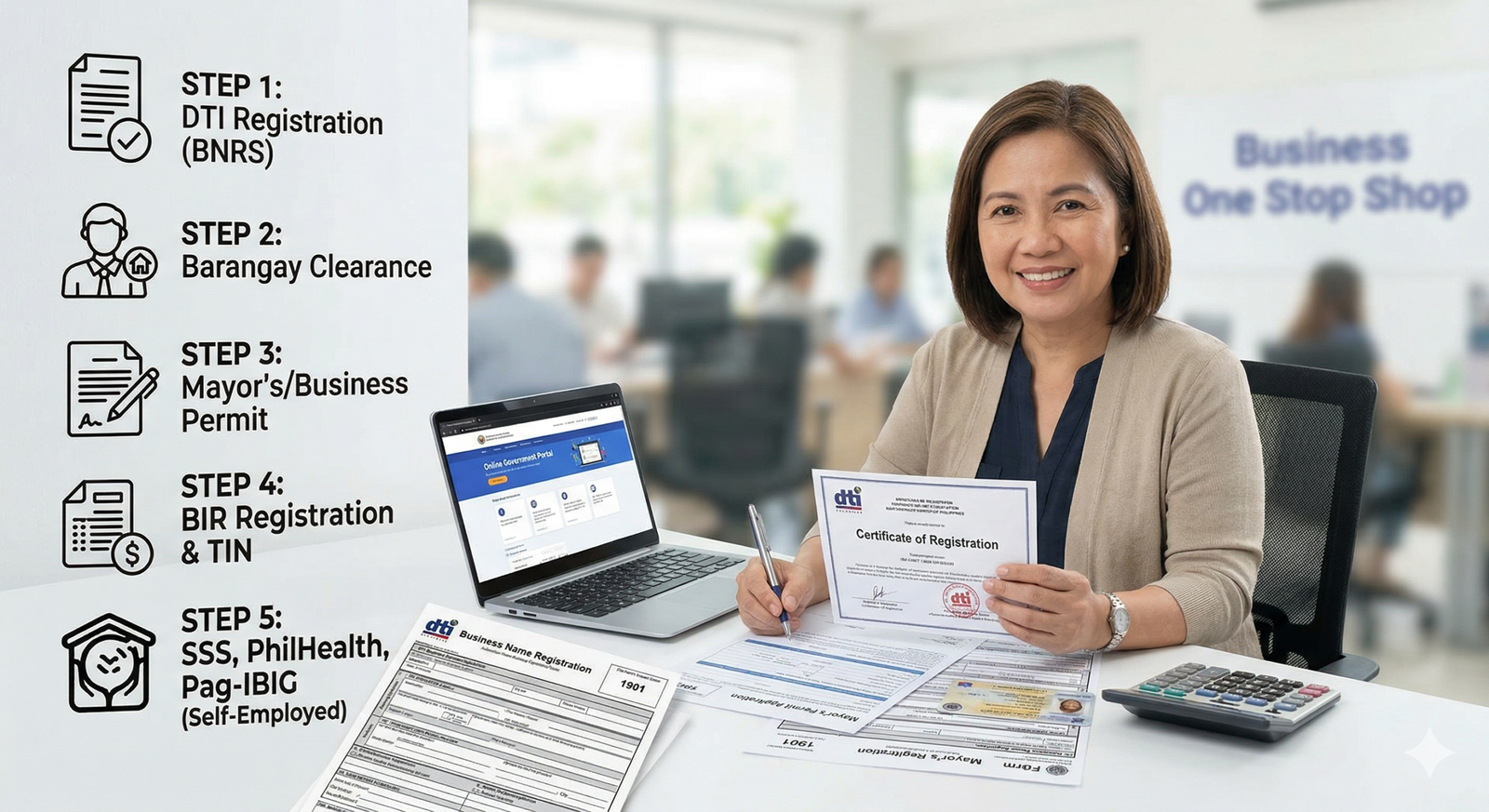
Step 1: Reserve Your Business Name with DTI
Your first step is to secure your desired business name. This is done through the Department of Trade and Industry (DTI). You can do this online through the DTI’s Business Name Registration System (BNRS) at https://bnrs.dti.gov.ph/. Be prepared with a few alternative names in case your first choice is already taken. The processing fee is minimal, and you’ll receive your DTI Certificate of Registration upon approval. This certificate is typically valid for five years.
Step 2: Obtain Barangay Clearance
With your DTI certificate in hand, head to your local Barangay Hall where your business is located. You’ll need to secure a Barangay Clearance, which signifies that your business is allowed to operate in that specific community. The requirements usually include a copy of your DTI certificate, proof of address (like a utility bill or lease contract), and a valid ID.
Step 3: Secure Mayor’s Permit or Business Permit
Next, make your way to the City or Municipal Hall’s Business Permits and Licensing Office (BPLO). Here, you’ll apply for your Mayor’s Permit or Business Permit. The requirements can vary slightly depending on the local government unit (LGU), but generally involve:
-
Application Form: Obtainable from the BPLO.
-
DTI Certificate of Registration: Copy and original for verification.
-
Barangay Clearance: Copy and original for verification.
-
Lease Contract (if applicable): If you’re renting your business space.
-
Occupancy Permit: From the Engineering Office (if applicable).
-
Fire Safety Inspection Certificate: From the Bureau of Fire Protection (BFP).
-
Sanitary Permit: From the City/Municipal Health Office (if applicable).
-
Other specific requirements: Based on your line of business (e.g., environmental clearance, food handler’s seminar, etc.).
Upon submission and payment of the necessary fees, the BPLO will process your application and issue your Mayor’s Permit.
Step 4: Register with BIR (Bureau of Internal Revenue)
Once you have your Mayor’s Permit, it’s time to get registered with the BIR. This step ensures you’re a legitimate taxpayer. Head to the BIR Revenue District Office (RDO) with jurisdiction over your business location. You’ll need to fill out Form 1901 (Application for Registration for Sole Proprietorship). The requirements include:
-
DTI Certificate of Registration: Copy and original for verification.
-
Mayor’s Permit: Copy and original for verification.
-
Lease Contract (if applicable): Copy.
-
Proof of Address: Copy of utility bill or other documents.
-
Valid ID: Copy and original for verification.
-
Payment of Registration Fee: Pay the annual registration fee of P500.
After processing, you’ll receive your BIR Certificate of Registration (COR) and your Taxpayer Identification Number (TIN).
Step 5: Apply for Books of Accounts and Authority to Print Receipts (ATP)
With your BIR COR, you’re now required to maintain proper accounting records. You’ll need to apply for the registration of your Books of Accounts (like general journal, general ledger, sales journal, and purchase journal) at your BIR RDO. You’ll also need to apply for an Authority to Print (ATP) for your official receipts. This allows you to have official receipts printed by accredited printers.
Step 6: Register with SSS, PhilHealth, and Pag-IBIG
Even if you don’t have employees yet, it’s recommended to register with the Social Security System (SSS), Philippine Health Insurance Corporation (PhilHealth), and Home Development Mutual Fund (Pag-IBIG). This will make the process easier when you do eventually hire employees. You’ll need to fill out the respective application forms and provide copies of your BIR COR and DTI certificate.
Renewing Your Sole Proprietorship: Keeping Your Business Compliant
Business permits and licenses aren’t permanent. For sole proprietorships, you’ll need to renew certain permits and pay annual fees to remain compliant and avoid penalties.
1. Renew Business Name with DTI:
Your DTI Certificate of Registration is valid for five years. You’ll need to renew it before the expiry date to continue using your business name. The renewal process is similar to the new registration and can be done online through the BNRS.
2. Renew Barangay Clearance:
Barangay clearance is typically renewed annually. Check with your local Barangay Hall for the specific requirements and timeline for renewal.
3. Renew Mayor’s Permit or Business Permit:
Your Mayor’s Permit is also an annual requirement. The renewal period typically falls within the first month of the calendar year (usually January). Be prepared to present your previous Mayor’s Permit, updated Barangay Clearance, and pay the annual business tax and other regulatory fees.
4. Pay Annual BIR Registration Fee:
Every year, by January 31, you’re required to pay the annual BIR registration fee of P500. You can pay this at any accredited agent bank or through online payment channels.
5. Keep Records Updated:
Continue maintaining your Books of Accounts and ensure your contact details with BIR, SSS, PhilHealth, and Pag-IBIG are current.
Make Your Business Registration Journey Seamless with 25East!
Feeling overwhelmed by the paperwork, regulations, and multi-agency processing? You’re not alone. Registering a sole proprietorship in the Philippines, whether new or renewal, can be a complex and time-consuming endeavor. Why navigate this intricate path when you can focus your energy on building your dream business?
At 25East, we specialize in making business registration a breeze. Our team of experts understands the ins and outs of the Philippine bureaucratic landscape. We can handle everything for you – from DTI registration to Mayor’s Permits, BIR processing, and beyond. We’ll guide you through every step, ensuring all requirements are met accurately and efficiently. Let us take the hassle out of registration, so you can focus on what you do best: running your business!
Contact 25East today for a personalized consultation. Let’s make your business official! Or email us at support@25east.com. We’re excited to help you start your business journey on the right foot!